LEBANON– Environment Minister Tamara Elzein stressed that the town of Bint Jbeil is not merely a geographic location, but rather a part of South Lebanon’s memory, history, and cultural and social identity, emphasizing that protecting towns and villages goes beyond rebuilding buildings to preserving their heritage and stories.
Elzein noted that throughout its history, Bint Jbeil has served as a prominent cultural and economic center in South Lebanon, hosting intellectual and commercial activity that extended across the Bint Jbeil district and surrounding villages. She said that the value of cities is not measured only by the number of their buildings, but by the memories, identity, and sense of belonging they carry.
The minister said that the destruction of any town does not only mean the loss of physical structures, but also affects the landmarks that preserve the story of a place and the deep connection between people and their land. She added that true history lives in collective memory, place names, and the stories passed down through generations.
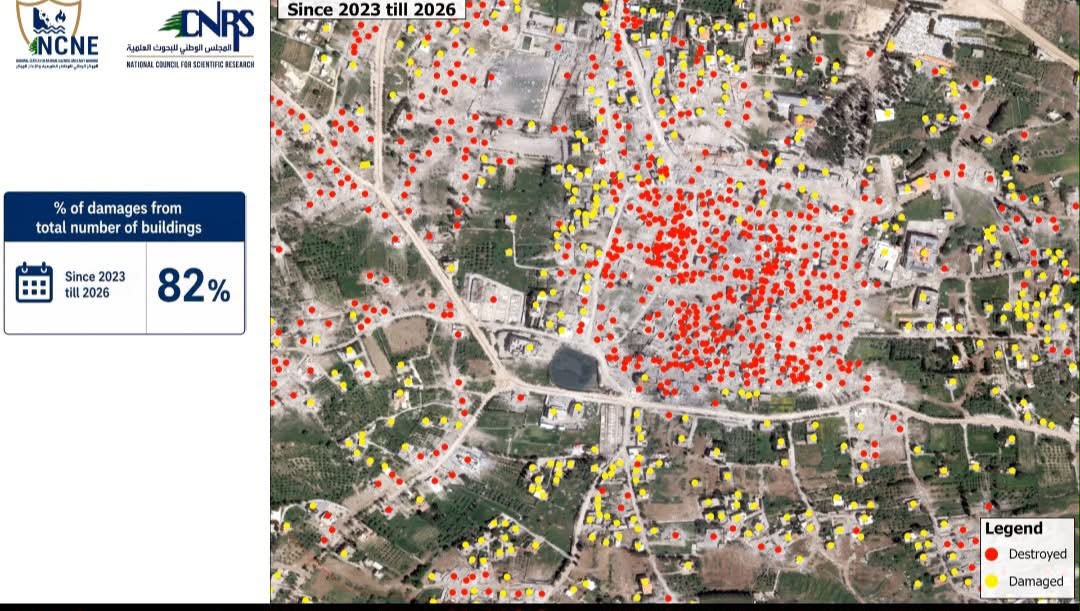
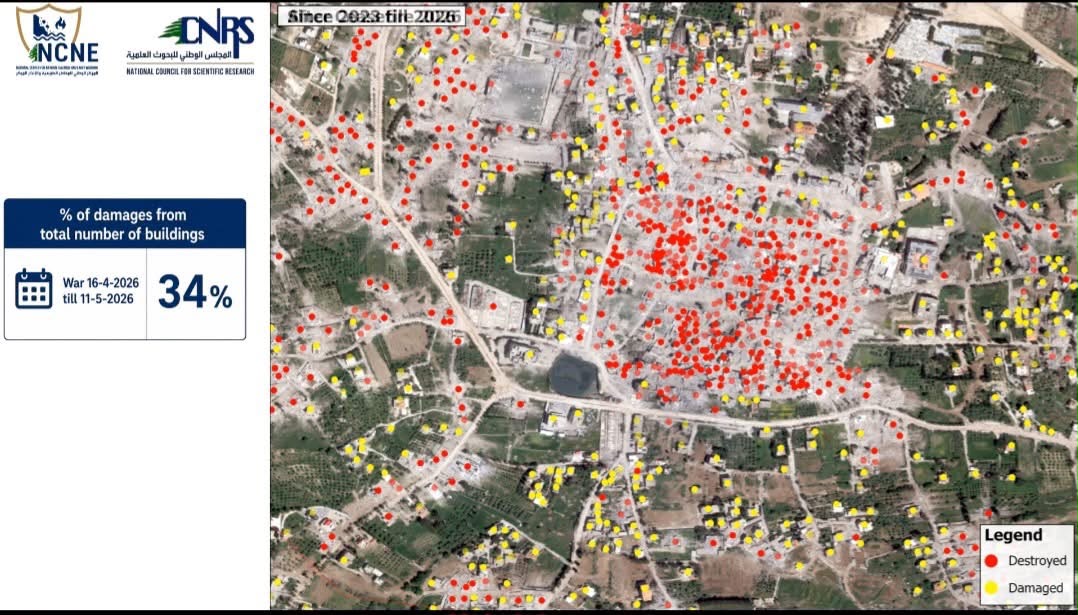
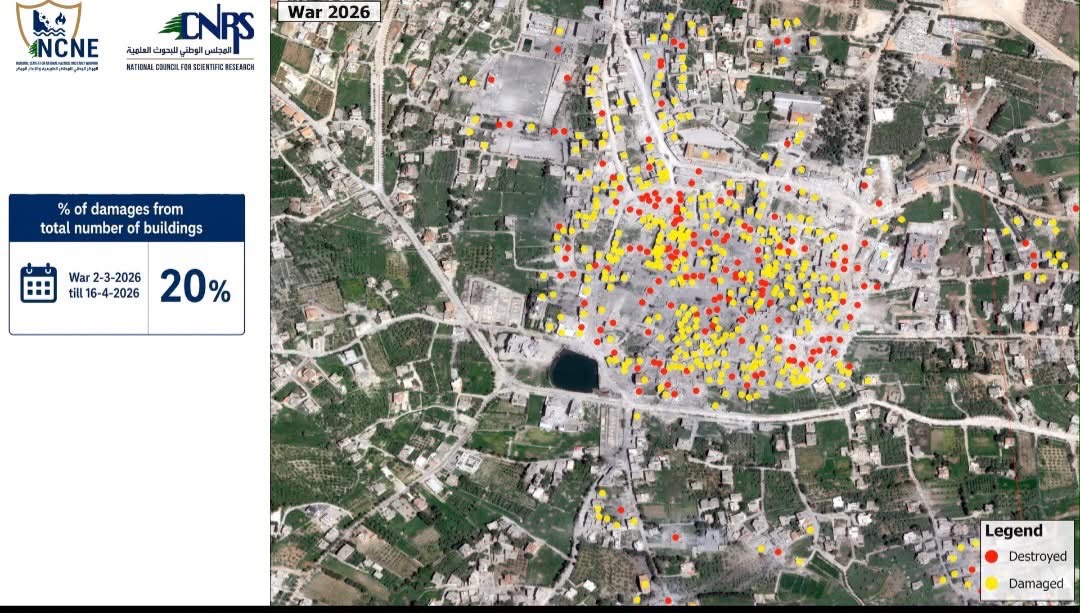
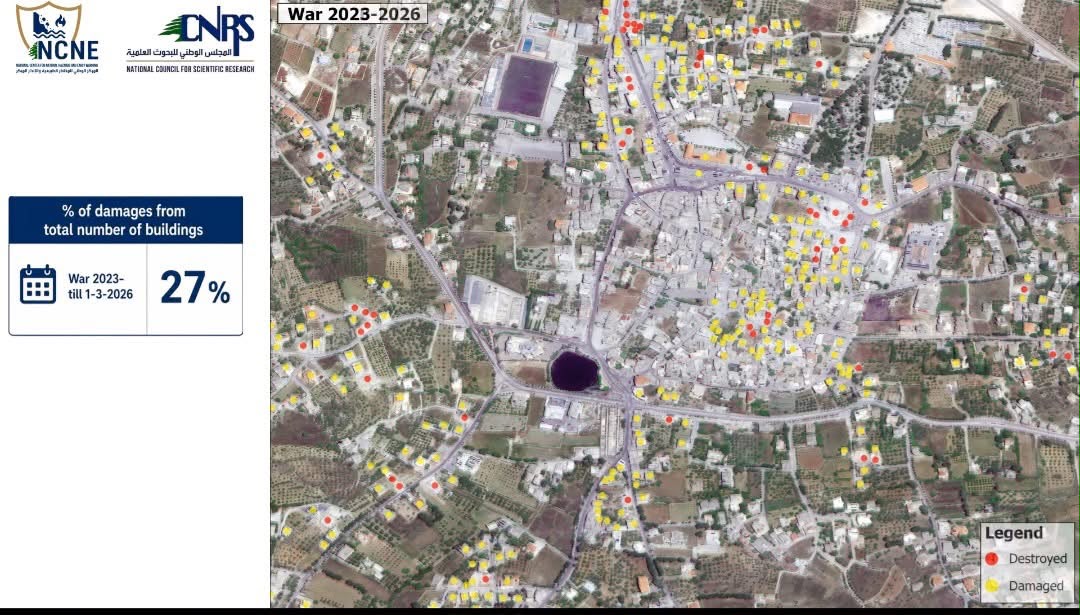
In a post, Elzein highlighted the scale of damage inflicted on Bint Jbeil since October 2023, citing data from the National Council for Scientific Research. She said that damage affected 27% of the town’s buildings by 2 March 2026, with the figure rising to 47% between 2 March and 16 April 2026.
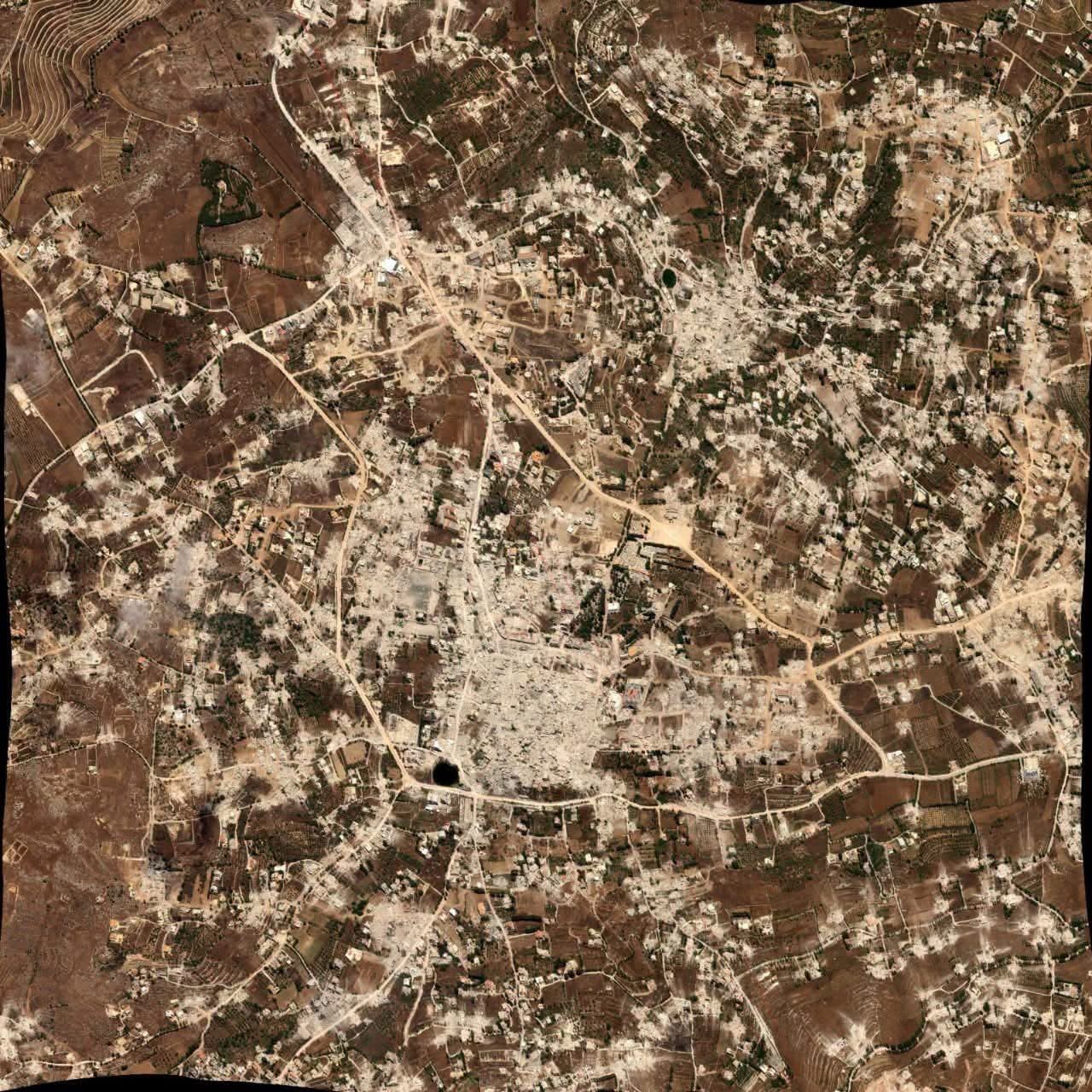
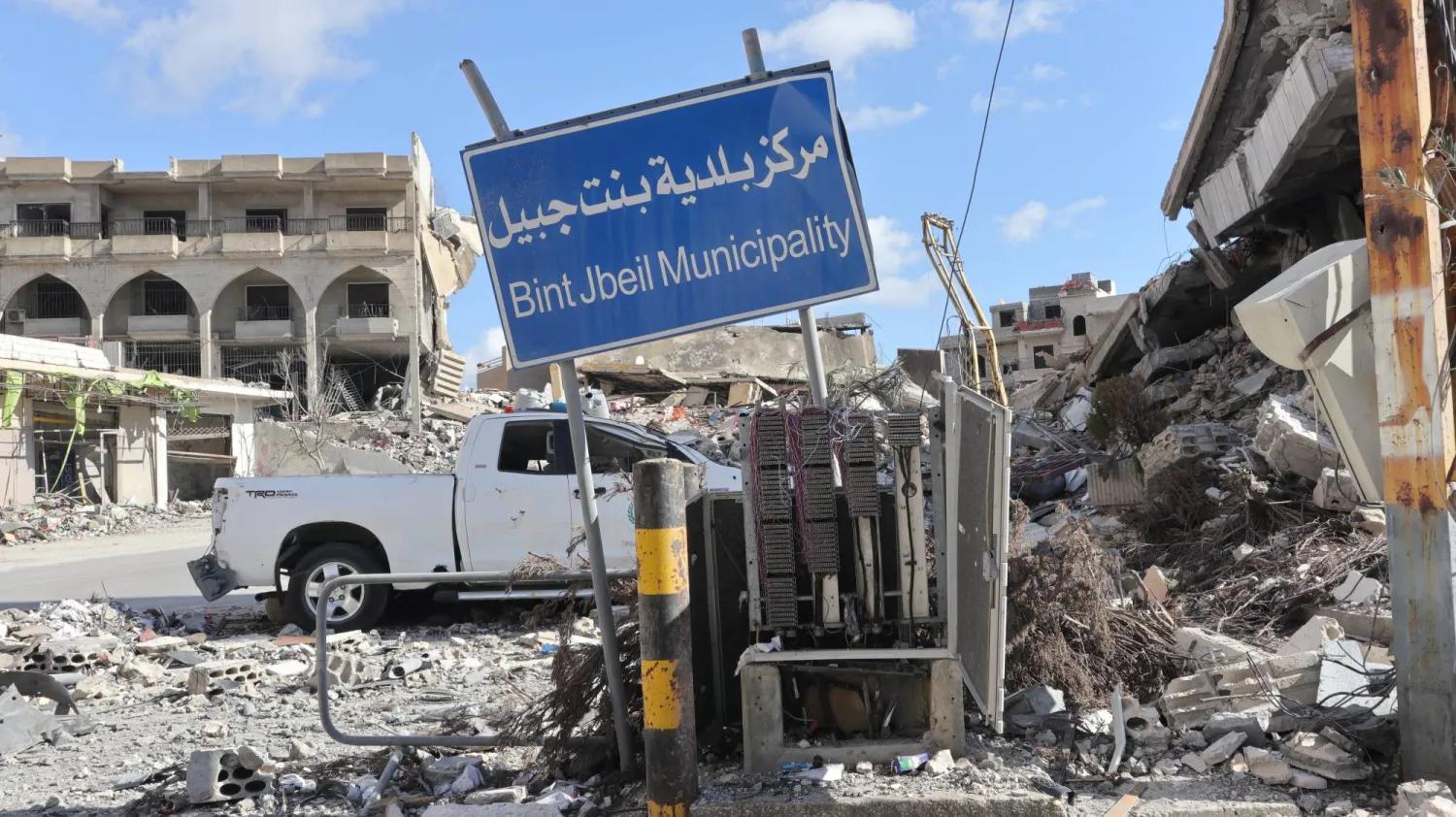
She added that the damage rate reached 82% between 16 April and 11 May 2026, following bombardment, demolitions, and bulldozing operations that affected a large number of buildings. She noted that circulating images show the continuation of urban destruction in the town.
The Environment Minister stressed the need not to reduce the history of cities and villages to the scale of destruction and losses alone, emphasizing that homes, neighborhoods, and agricultural lands serve as repositories of identity and collective memory, carrying people’s lives, dreams, and histories.
She further affirmed that documenting the history of cities and reviving their cultural, social, and intellectual heritage are essential steps in preserving national memory. She said that rebuilding southern Lebanon is not limited to reconstructing buildings, but also involves reviving the stories and identity that give places their meaning.