



LEBANON– In a country where energy crises have become part of everyday life, any new source of oil may appear to be an opportunity that cannot be overlooked.
For Lebanon, however, the question should go beyond securing oil supplies or reducing the cost of importing petroleum products.
The more important question is: How can Lebanon benefit from regional energy cooperation today without delaying its transition towards a cleaner and more sustainable energy system tomorrow?
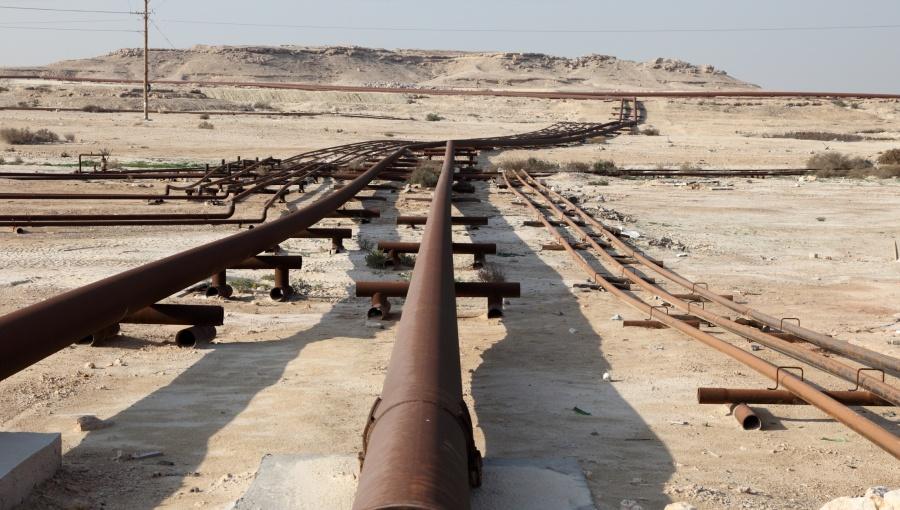
This question has resurfaced amid discussions about the possible revival of the Iraqi–Syrian oil pipeline, known as the Kirkuk–Baniyas pipeline. Its revival could put Lebanon back on the map of regional energy projects, particularly through Tripoli’s facilities and the country’s oil infrastructure in the north.
At a time when Lebanon is facing a severe economic crisis, high energy costs and damaged infrastructure, the project could bring significant economic opportunities. But if managed through a short-term lens, it could become yet another project that deepens reliance on fossil fuels. If incorporated into a broader transition strategy, however, it could provide an opportunity to help finance a different future.
From Energy Security to Sustainability
In an exclusive interview with Enmaeya, economist and member of the Economic, Social and Environmental Council Dr. Anis Abu Diab said that reviving the Kirkuk–Baniyas pipeline could bring multiple benefits to Lebanon.
Abou Diab noted that the oil pipeline was historically connected to Tripoli, with routes transporting Iraqi oil, one leading towards Baniyas and another towards refining facilities in Lebanon.
According to Abou Diab, the route connected to Lebanon’s refining facilities historically had a significant capacity of up to around 450,000 barrels per day.
Reconsidering this infrastructure, he argues, could give Lebanon an opportunity to reduce the cost of importing petroleum products while also generating state revenues through fees associated with the use of its facilities or the transit of oil through its territory.
From a sustainability perspective, however, these economic benefits should not be the ultimate objective.
Any savings resulting from lower energy costs could instead become an opportunity to invest in solar and wind energy, modernise the electricity grid and improve energy efficiency.
Can Oil Finance Lebanon’s Green Future?
Lebanon imports large quantities of oil and petroleum products every year, making its energy bill a significant burden on the economy.
Abou Diab estimates that oil and petroleum products account for around 25% to 28% of Lebanon’s total imports, with annual import costs reaching approximately $5 billion to $6 billion.
Any reduction in this bill could ease pressure on the economy.
But what would Lebanon do with these savings?
This is where the revival of the Kirkuk–Baniyas pipeline could become an opportunity to finance a transitional phase in Lebanon’s energy sector.
Rather than using the savings solely to increase fossil fuel consumption, part of them could be directed towards:
Developing solar and wind energy projects.
Modernising the electricity grid and reducing losses.
Improving energy efficiency in buildings and factories.
Developing electricity storage systems.
Supporting the transition to more efficient, lower-emission transport.
Financing green innovation and technology.
Supporting local communities affected by energy projects.
In this way, oil projects would not become an alternative to renewable energy, but rather a transitional phase that helps Lebanon finance its shift towards it.
Solar Energy Alone Is Not Enough
Lebanon has witnessed significant growth in the use of solar energy, but this expansion still requires greater regulation and better integration into the national electricity grid.
Abou Diab believes that public policies play a crucial role in regulating the sector, particularly as reliance on solar energy continues to grow among households and institutions.
Sustainability, however, is not simply about installing more solar panels. It means building an integrated energy system that combines renewable energy, modern electricity grids, storage solutions and energy efficiency, while connecting Lebanon to regional grids when this makes economic and environmental sense.
Lebanon could therefore benefit from regional cooperation not only to secure oil or electricity, but also to exchange expertise and technology and develop joint clean-energy projects.
From an Oil Pipeline to a Regional Energy Network
Abou Diab believes Lebanon could become part of a broader regional energy system through cooperation on electricity and gas imports and the development of energy infrastructure.
This could eventually include projects linking Lebanon with Syria, Jordan, Egypt and Turkey, alongside the development of Lebanon’s offshore resources.
Such regional integration could help reduce energy costs and improve the competitiveness of the Lebanese economy.
More importantly, however, regional energy integration could evolve from a model based solely on fossil fuels into a more diversified system combining conventional and renewable energy.
Under such a model, Lebanon could become a regional logistics and energy services hub, leveraging its geographic position without tying its economic future to a single energy source.
Infrastructure Is an Opportunity, If It Is Green
Reviving storage, refining and transportation facilities could create new economic opportunities, but it would also carry significant environmental responsibilities.
Any project involving the transportation, storage or refining of oil must be subject to strict environmental standards, including emissions monitoring, oil-spill prevention, protection of water and soil, and proper management of waste generated by refining operations.
Projects should also include clear emergency response plans, independent environmental impact monitoring and mechanisms for involving local communities in decision-making.
Economic development cannot be sustainable if it comes at the expense of public health or the environment.
Green Jobs and a More Diversified Economy
Regional energy integration could create employment opportunities in transportation, storage, logistics and refining.
But Lebanon could go further.
If these projects are accompanied by investment in renewable energy, new jobs could emerge in areas such as the installation and maintenance of solar energy systems, energy efficiency, smart-grid management, energy storage technologies and environmental engineering.
In this way, the energy sector could shift from being a source of crisis to becoming a driver of green job creation and a more diversified economy.
Politics Is Part of the Sustainability Equation
For Abou Diab, the future of energy projects cannot be separated from political developments in the region.
He points out that regional relations and political tensions have affected investments and energy projects in Lebanon over the past years.
This means that achieving energy security requires more than pipelines or power plants. It also requires stable policies, regional cooperation, transparent governance and a clear national strategy.
Ultimately, sustainability is not simply about choosing a less polluting energy source.
It is also about the ability to build long-term policies that do not change with every crisis, and to ensure that today’s investments serve the needs of future generations.