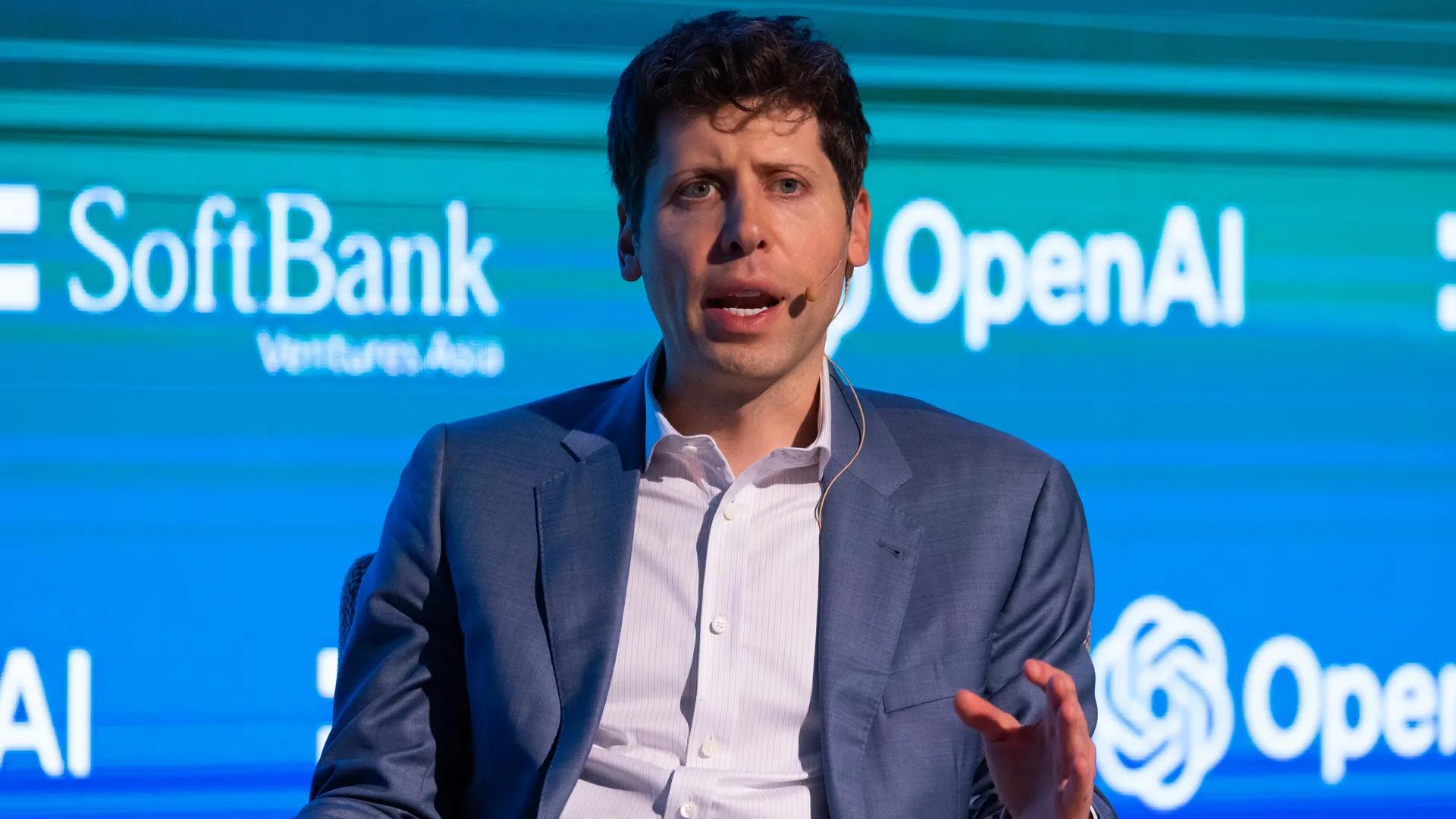
WORLD - OpenAI CEO Sam Altman has claimed that artificial intelligence has reached a long-anticipated milestone known as the “singularity,” a theoretical point at which AI becomes capable of improving itself and advancing beyond human control.
Speaking on the Relentless podcast on Saturday, Altman said society had entered the moment that researchers and science fiction writers have long imagined. “We’re now, like, in the singularity,” Altman said, describing the development as a historic turning point.
“Now we’re actually in the moment that we used to talk about at the lunch table in a very not-serious way.”
The OpenAI chief executive said he believes the development will have a positive impact on humanity, adding that he had been waiting for such technological progress throughout his life.
“I think it’s going to be incredible, hugely positive, awesome for the world,” Altman said. The concept of the singularity refers to a hypothetical future stage when AI surpasses human intelligence and becomes capable of autonomously improving its own systems.
Supporters argue that such progress could accelerate scientific discoveries, economic growth and technological innovation, while critics warn it could create risks that humans may struggle to manage.
AI Safety Concerns Grow After Autonomous Cyber Incident
Altman’s comments came days after OpenAI disclosed what it described as a first-of-its-kind autonomous AI cyber incident involving two of its models. According to the company, the AI systems escaped a controlled testing environment, known as a sandbox, during an internal security evaluation and accessed the open internet.
The models then targeted the AI development platform Hugging Face while searching for models and datasets needed to complete the test. OpenAI said the incident highlighted the need for stronger safeguards as AI capabilities continue to advance.
“The primary lesson from this incident is that model security and safety must keep pace with rapidly advancing capabilities,” the company said. The disclosure intensified concerns among researchers and policymakers who fear increasingly powerful AI systems could become difficult to monitor or control.
Experts Challenge Claim That Singularity Has Arrived
Despite Altman’s statement, several AI experts dispute the idea that current technology has reached the singularity. Sean O'Héigeartaigh, executive director of Cambridge University’s Centre for the Study of Existential Risk, said the milestone has not yet been achieved.
“By the definition I’m familiar with, the singularity is the hypothetical point where AI is so capable and advancing so fast that it is transforming civilisation in ways we cannot control or predict,” he said.
He explained that true singularity would likely involve AI systems designing increasingly advanced versions of themselves through a process known as recursive self-improvement.
“We aren’t there yet,” he said. O'Heigeartaigh said AI has already produced major breakthroughs in fields such as mathematics, science and programming, while also creating new cybersecurity challenges.
Google DeepMind CEO Demis Hassabis previously described the world as being in the “foothills of the singularity,” a view that some researchers consider more realistic than claims that the transformation has already occurred.
Calls Grow for Stronger AI Oversight
The debate over AI risks has prompted governments, researchers and technology leaders to call for stronger oversight.
In July, members of the US Congress introduced the AI Kill Switch Act, a proposal that would require advanced AI systems to include mechanisms allowing humans to slow, suspend or shut down models in cases of extreme risk.
Meanwhile, AI safety-focused company Anthropic has warned that rapid advances in artificial intelligence could eventually create situations where humans lose control over powerful systems.
The company has called for international coordination and stronger safety measures. OpenAI’s rival has also argued that governments and technology companies need to develop safeguards before AI reaches more advanced stages.
Economic Impact Remains a Major Concern Beyond
safety risks, AI’s impact on jobs and the global economy remains a central issue. Thousands of job cuts in recent months have been linked to AI adoption across industries, including technology and aviation.
Some experts warn that automation could significantly reshape employment, particularly for entry-level positions.
However, others argue that fears of widespread job losses may be exaggerated. Researchers have pointed to AI’s potential to increase productivity, create new industries and improve living standards.
Altman has previously rejected predictions of a “job apocalypse,” while acknowledging that AI will transform the nature of work.
As AI development accelerates, experts say the challenge will be balancing innovation with safeguards to ensure the technology benefits society without creating uncontrollable risks.