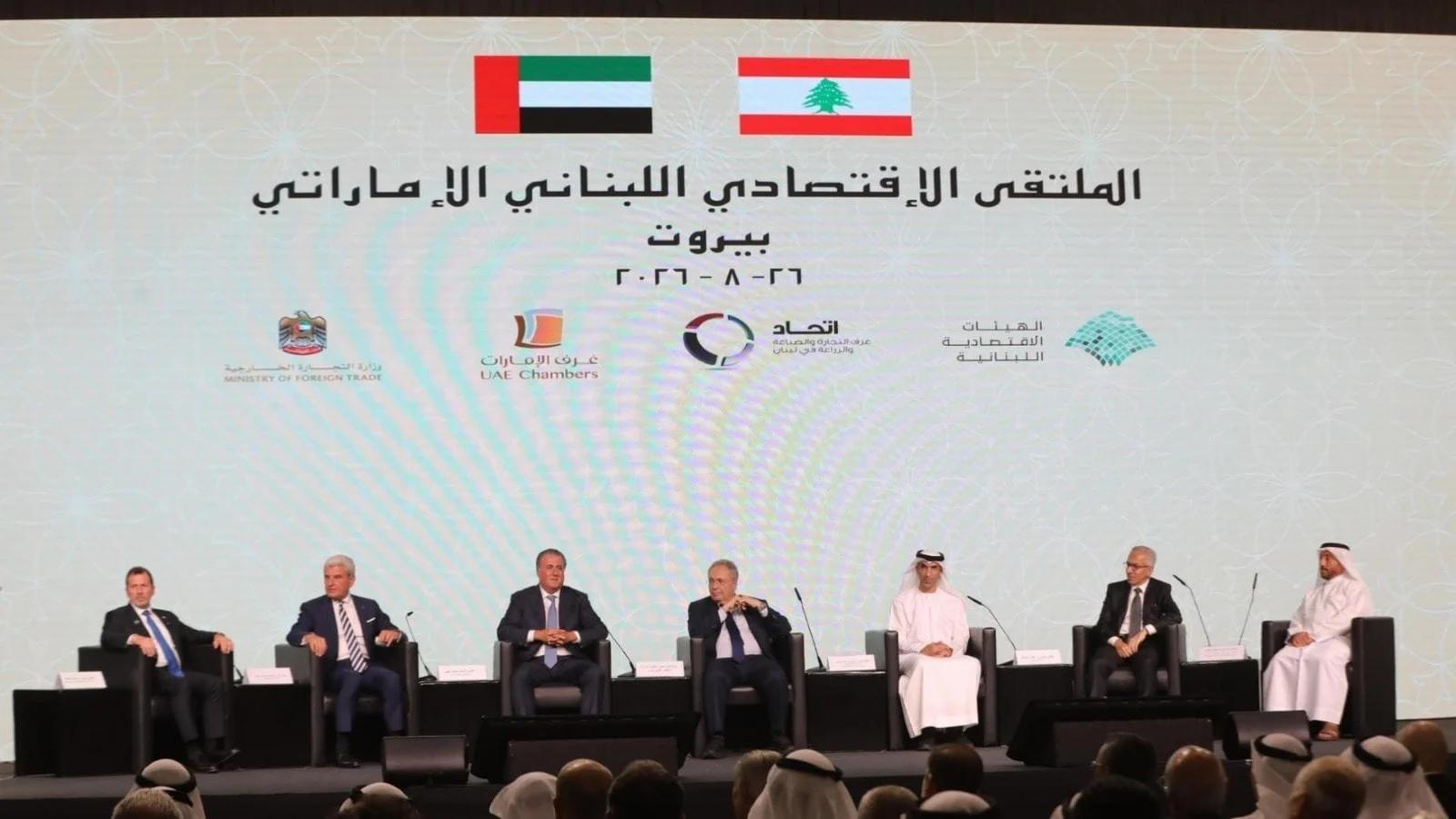
BEIRUT - Lebanon and the United Arab Emirates signed five memoranda of understanding and held the first meeting of their joint business council during the Lebanese-Emirati Economic Forum, as officials and business leaders discussed investment, trade and opportunities for deeper economic cooperation.
The forum brought together a high-level UAE delegation led by Minister of State for Foreign Trade Thani bin Ahmed Al Zeyoudi, alongside around 90 Emirati business leaders, investors and economic figures.
Lebanese officials and approximately 120 businesspeople also attended, representing sectors including trade, industry, agriculture, tourism, information technology, oil and gas, banking, infrastructure and services.
Trade Reaches $4.2 Billion
Minister Al Zeyoudi said non-oil trade between the UAE and Lebanon reached $4.2 billion in 2025, representing annual growth of 35.6%.
He said the figures demonstrated strong foundations for expanding bilateral economic ties, while the broad participation of Emirati businesses reflected growing confidence in opportunities in the Lebanese market.
The UAE delegation included representatives from logistics, food security, agriculture, healthcare, oil and gas, renewable energy, aviation, artificial intelligence, tourism and other sectors.
Minister Al Zeyoudi said governments were responsible for establishing an enabling business environment, while the private sector remained the main driver of investment, innovation and job creation.
Focus on Investment and Reconstruction
Lebanese officials presented investment opportunities linked to the country's expected reconstruction and infrastructure needs.
Economy and Trade Minister Amer Bisat said Lebanon's productive capacity remained significantly greater than its current output, supported by a dynamic private sector, skilled human capital and established regional and international relationships.
However, he stressed that investment required reforms to the banking sector, financial framework and public services, alongside stronger state institutions and an improved business environment.
Public Works and Transport Minister Fayez Rasamny highlighted infrastructure opportunities, while Technology and Artificial Intelligence Minister Kamal Shehadeh called for stronger cooperation in technology, innovation and the digital economy.
Shehadeh proposed gradually developing a shared digital market based on compatible rules and standards to facilitate the movement of companies, investments, digital services, data and talent between the two countries.
Five Memoranda Signed
The two sides signed five memoranda covering business cooperation, investment and agricultural technology.
The first established a joint Lebanese-Emirati Business Council between the UAE Federation of Chambers of Commerce and Industry and the Federation of Lebanese Chambers.
The second memorandum linked the Beirut and Mount Lebanon Chamber of Commerce, Industry and Agriculture with the Abu Dhabi Chamber of Commerce and Industry, while the third established cooperation between the Beirut and Mount Lebanon Chamber and the Ras Al Khaimah Chamber.
The fourth memorandum, between Elite Agro Holding and the American University of Beirut, focused on food security, dryland agriculture research and innovation.
The fifth, signed by Elite Agro Holding and Jerji Dakash & Sons, focused on greenhouse solutions, including design, supply, installation, operation, maintenance, technical support, training and joint development.
Business Council to Pursue Projects
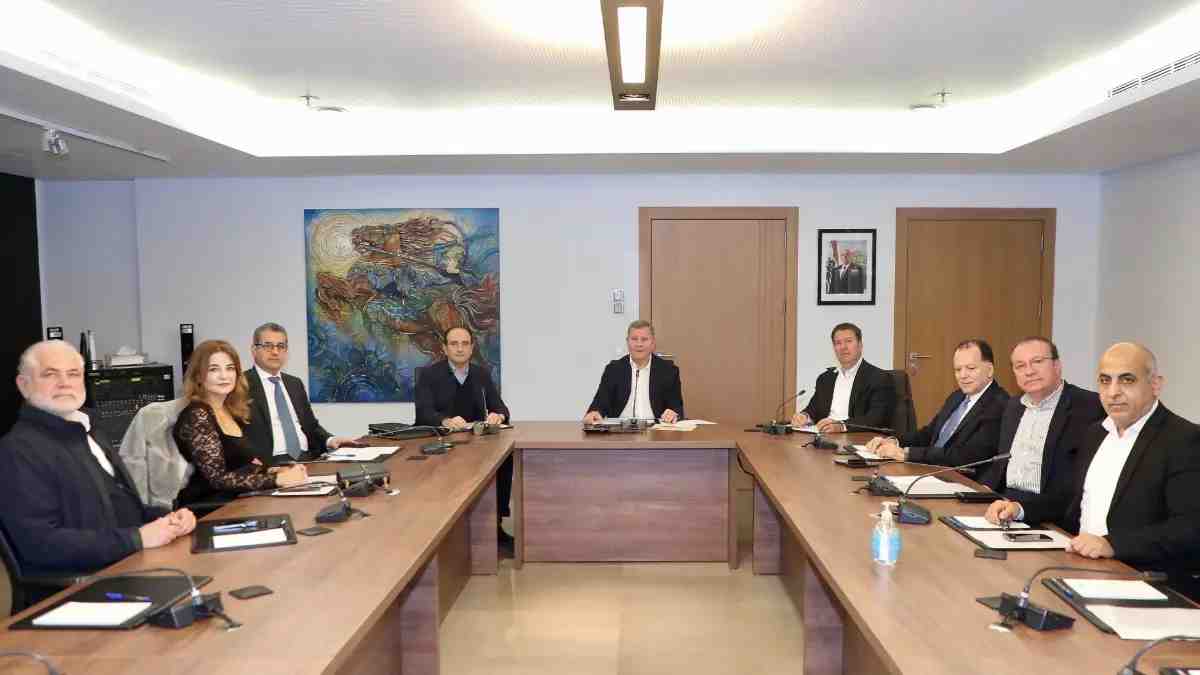
Following the signing ceremony, the newly established joint business council held its first meeting, chaired by Hamad Buamim for the UAE side and Wasim Daher for the Lebanese side.
Buamim said the council should focus on practical outcomes by identifying investment opportunities, addressing obstacles and turning business discussions into partnerships and projects.
He said capital requires confidence, while confidence depends on reforms, adding that work should begin without waiting for every challenge facing Lebanon to be resolved.
The forum also included sessions on infrastructure and reconstruction, as well as investment opportunities and the role of the private sector.
Officials said the visit marked a potential new phase in Lebanon-UAE economic relations, with the focus shifting from dialogue and coordination toward concrete investments, partnerships and projects.