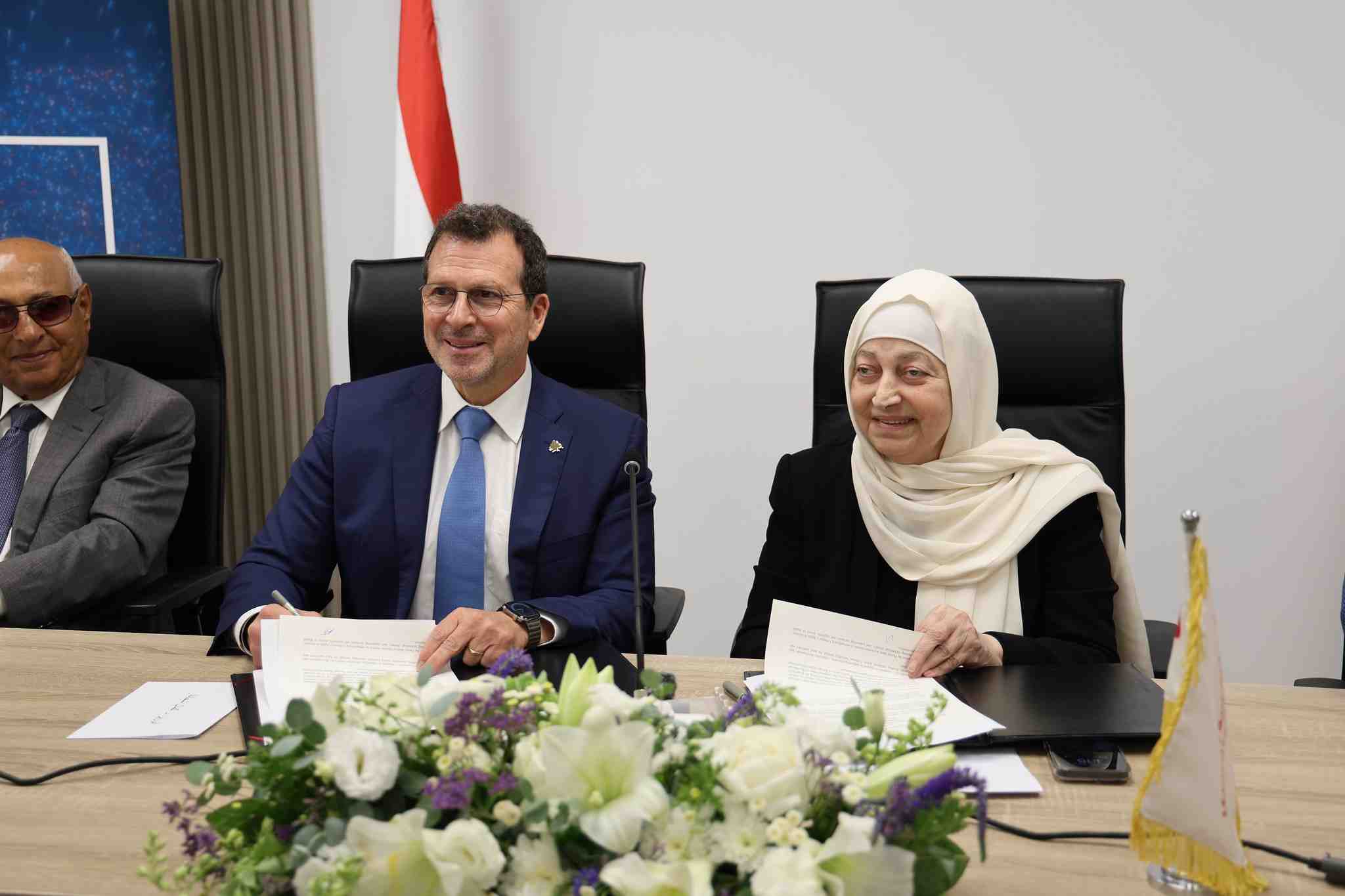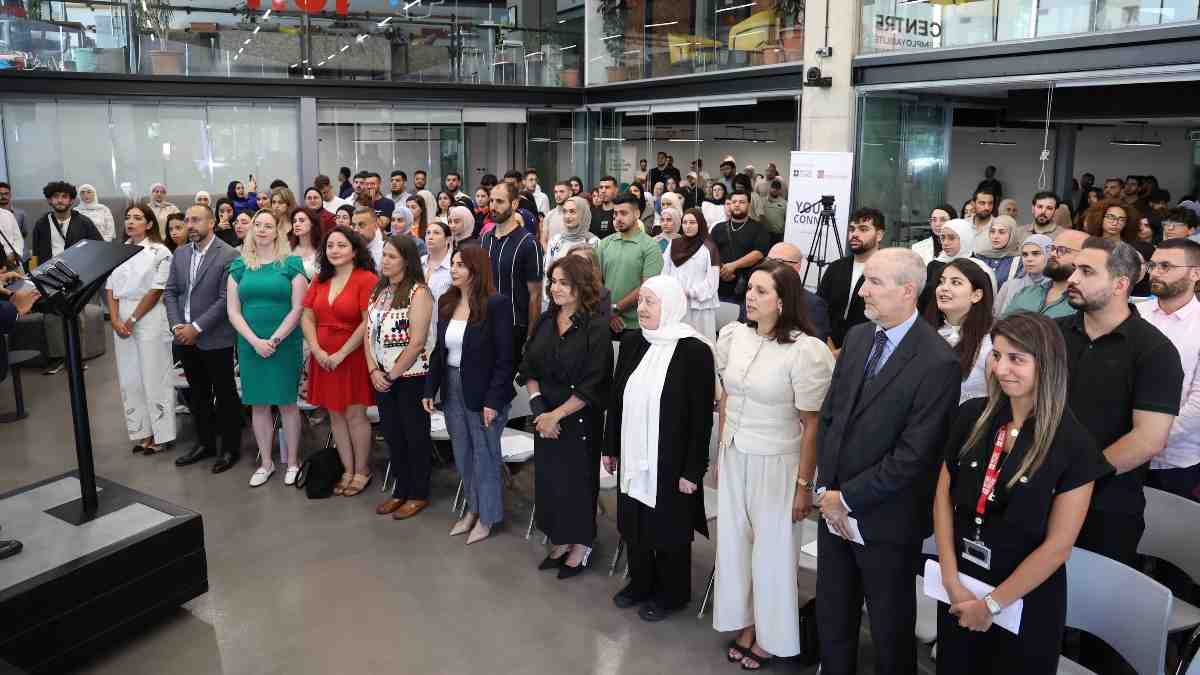




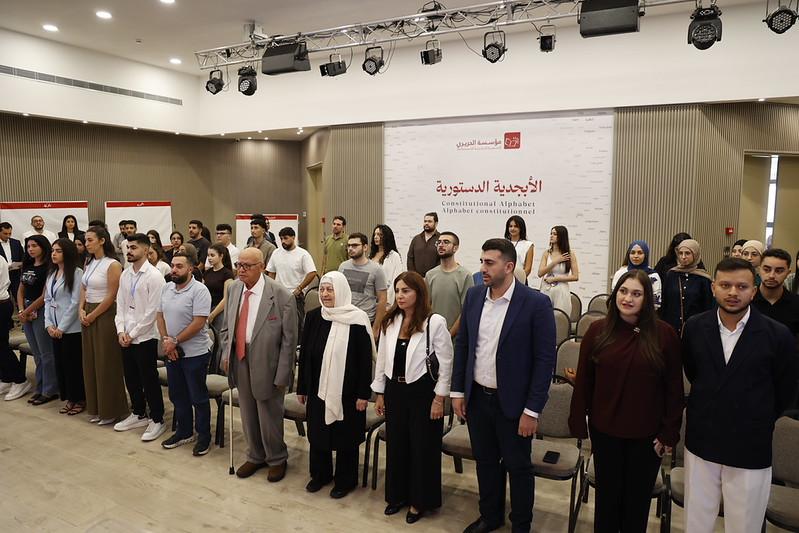
SAIDA - The Hariri Foundation for Sustainable Human Development organized a workshop marking the centenary of the Lebanese Republic, bringing together 65 young people from Saida and surrounding areas to discuss a long-term vision for Lebanon as a “Smart Republic.”
Held at the National State Academy in Saida under the theme “Towards a Declaration of the Smart Republic: The Republic’s Centenary 1926-2026-2126,” the workshop was organized through the foundation’s Lebanon Youth Renaissance Forum.
The event was attended by Mrs. Bahia Hariri, vice president of the Hariri Foundation, former Saida Mayor Mohamed El Saudi, and the foundation’s director, Dr. Roubina Abu Zeinab.
Mrs. Hariri Calls for a New “Alphabet”
The workshop opened with the Lebanese national anthem, followed by a video presentation examining political and global transformations that have shaped Lebanon and the wider world over the past century.
Mrs. Hariri said the initiative builds on the commemoration of Lebanon’s constitutional centenary on May 23, 2026, and comes as technology and artificial intelligence increasingly influence daily life, institutions, and decision-making.
She argued that Lebanon needs to develop a “new alphabet” to respond to these changes, drawing a parallel with the country’s historical association with the development of alphabets.
“Lebanon, which carried the first alphabet to the world from the shores of Tyre and Byblos, is capable today of helping shape the new alphabet,” she said.
She said Lebanon’s main resource lies in its people and their knowledge, particularly its youth and diaspora, whose skills could contribute to the country’s future.
Technology “in Service of People”
Mrs. Hariri said a smart republic should not seek to replace people with machines or citizens with artificial intelligence.
Instead, she said, technology should make knowledge more accessible, constitutional principles clearer, institutions more transparent and civic participation more accessible to younger generations.
“As we begin the second century, perhaps the question is: how do we build a republic that knows its citizens and whose citizens know it?” she said.
She urged the forum’s members to transform the concept of the "Smart Republic" into a project and eventually into a Lebanese model in which technology serves people, knowledge serves citizenship and intelligence serves the republic.
A Century of Lessons
The workshop looked back at Lebanon’s first 100 years as a republic, tracing the country’s political and institutional development from the French Mandate and the establishment of the Lebanese state between 1920 and 1943, through independence, the civil war, post-war reconstruction and Syrian tutelage.
The discussion also covered the political upheavals that followed the 2005 Cedar Revolution, the economic and social crises that began intensifying in 2019, and the subsequent period of conflict and recovery through 2026.
The review was used as a starting point for a broader question: what should Lebanon’s republic look like in its second century, and what lessons from the past 100 years should shape that future?
A Vision for the Next 100 Years
The workshop proposed a “Smart Republic” as a long-term national vision for Lebanon from 2026 to 2126.
The concept goes beyond digitalizing government institutions. It envisions a state that can use data and foresight to make decisions, learn from experience, adapt to changing circumstances, and improve public services, while keeping human dignity, good governance, and the rule of law at the center of its institutions.
The vision also places young people at the center of shaping the country’s future, arguing that those who will live through the coming century should have a role in defining its priorities and institutions.
Calls for a New Social Contract
The workshop also highlighted the need to reconsider the relationship between Lebanese citizens and the state.
Participants identified the pressures placed on Lebanon’s existing social contract by interconnected political, economic and social crises, particularly their impact on equal citizenship, public services and trust in state institutions.
The discussion identified services, security and political participation as key priorities for young people, alongside demands for the rule of law, economic justice, political reform, accountability and security provided through state institutions.
These priorities were presented as key elements of a renewed social contract for the proposed Smart Republic.
Six Priorities for the New Republic
Participants identified six main areas to guide their vision for Lebanon’s next century:
Modernization
Governance
Science and philosophy
Climate change
Youth and future generations
Artificial intelligence
The 65 participants were divided into groups to examine how each area could shape Lebanon over the next 100 years. Youth and artificial intelligence were treated as cross-cutting themes that intersect with the other areas.
The workshop also used AI-generated virtual figures to introduce perspectives on Lebanon’s future and explore strategic development planning and potential risks.
Draft Declaration of the Smart Republic
The discussions culminated in a draft “Declaration of the Smart Republic,” bringing together the participants’ proposals for Lebanon’s next century across the six priority areas.
The draft was put to a vote at the end of the workshop, with participants identifying its main priorities.
The initiative is expected to continue through additional workshops aimed at developing the declaration further and translating the youth-led vision into a broader framework for Lebanon’s second century.
The proposed vision ultimately places technology, knowledge, youth participation, and accountable governance at the center of efforts to shape Lebanon between 2026 and 2126.