



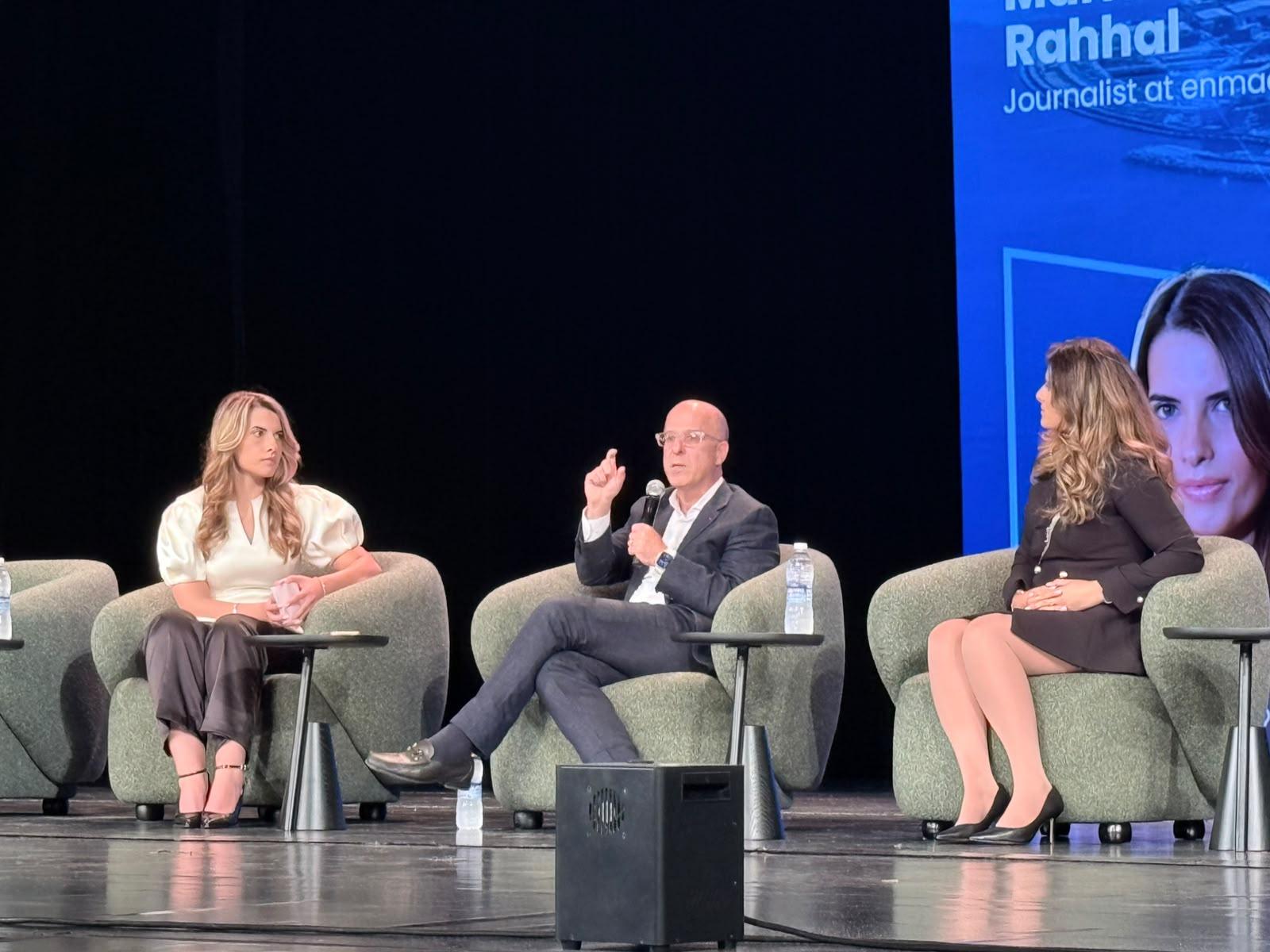
LEBANON - At Creator Summit 2026, held at Casino du Liban, Enmaeya, an AI-powered digital development platform launched by the Hariri Foundation for Sustainable Human Development, hosted a panel titled “Trust, Technology and Transformation,” exploring Lebanon’s efforts to modernize public administration, integrate technology into government services and build institutions around citizens’ needs.
The panel was moderated by Maria Rahhal, journalist at Enmaeya, and featured Minister Dr. Fadi Makki, Minister of State for Administrative Reform, alongside Marina Khawand, youth activist and founder of Medonations.
Minister Dr. Makki outlined OMSAR’s reform vision around three main pillars: governance, human resources and digital transformation. On governance, Minister Dr. Makki said that the last comprehensive assessment of the integration between ministries dates back to 1960, adding that OMSAR is now reassessing these structures to identify gaps and clarify how government institutions can function more effectively.
Minister Dr. Makki also addressed the challenges facing Lebanon’s public administration, particularly the shortage of qualified personnel. He said that, contrary to the perception that the public sector is overcrowded with employees, between 75% and 80% of positions across public institutions are vacant. He pointed to shortages in key functions including strategic planning, human resources management and internal auditing.
Rather than simply attempting to restore staffing levels across traditional government roles, Minister Dr. Makki said the administration needs to consider technology, digital transformation and the integration of the private sector.
He also highlighted the potential role of young people and small and medium-sized enterprises in addressing gaps in public services and improving productivity. However, he stressed that privatization does not eliminate the public sector’s role, as the government will continue to oversee and regulate these processes.
Minister Dr. Makki stressed that digital transformation is more than simply moving existing government procedures online. It requires re-engineering processes to create genuine value for citizens.
He pointed to the Dawlati platform as part of this effort, explaining that its success depends not only on its technical infrastructure but also on whether citizens trust and adopt digital services. OMSAR is therefore exploring behavioral approaches, including nudging and randomized testing, to better understand how people interact with digital government services.
Minister Dr. Makki said that digital trust also requires strong cybersecurity, data protection and a broader digital ecosystem supported by digital identification. The government is reviewing a range of administrative procedures for digitalization and simplification, including passport-related services, social security services and official approvals and permits.
He also highlighted digital payment systems and interoperability between government departments as important components of a more integrated e-government system. Among the services being prioritized are requests related to civil-status records, including individual and family civil-status extracts, record corrections and other administrative requests that citizens frequently need to complete.
Khawand brought a civil-society and youth perspective to the discussion, emphasizing that technology should respond to real problems in people’s daily lives rather than simply increasing the number of digital services available. Speaking from Medonations’ experience, Khawand argued that young people should not only be consulted during the development of public policies and services, but should participate directly in creating them.
She described Medonations’ co-creation approach, which brings together citizens, project managers and technology teams to map real user experiences and gather feedback. She also pointed to healthcare and telemedicine as examples where technology alone is not enough, noting that while tools such as AI assistants are increasingly accessible, users can remain hesitant when digital advice is not clearly connected to qualified professionals and trusted institutions.
An interactive Q&A session with the audience followed the discussion, fostering further exchange on the future of digital transformation in Lebanon and the development of more accessible digital public services.
The discussion highlighted the broader challenge facing Lebanon’s digital transformation: ensuring that technological progress is matched by institutional reform, public trust and services designed around citizens’ needs. For digital government to become more pervasive, the panel emphasized the importance of connecting technology, governance and human-centered design to create public services that are more accessible, efficient and responsive.