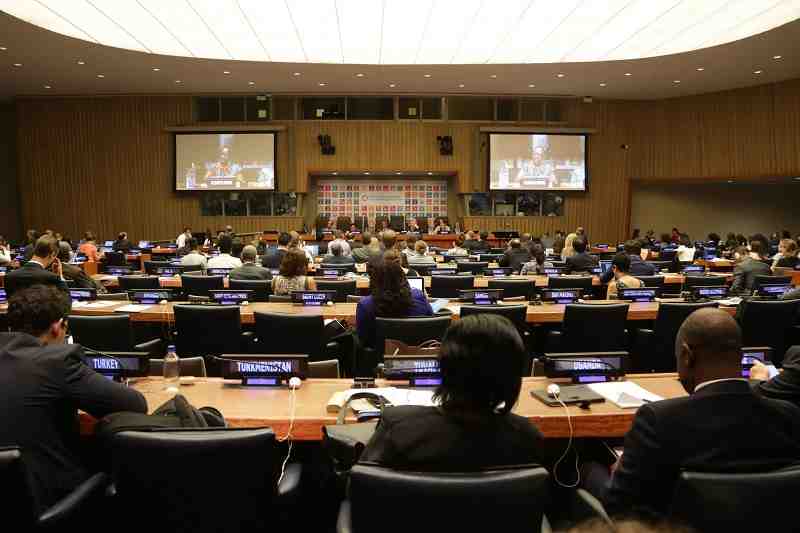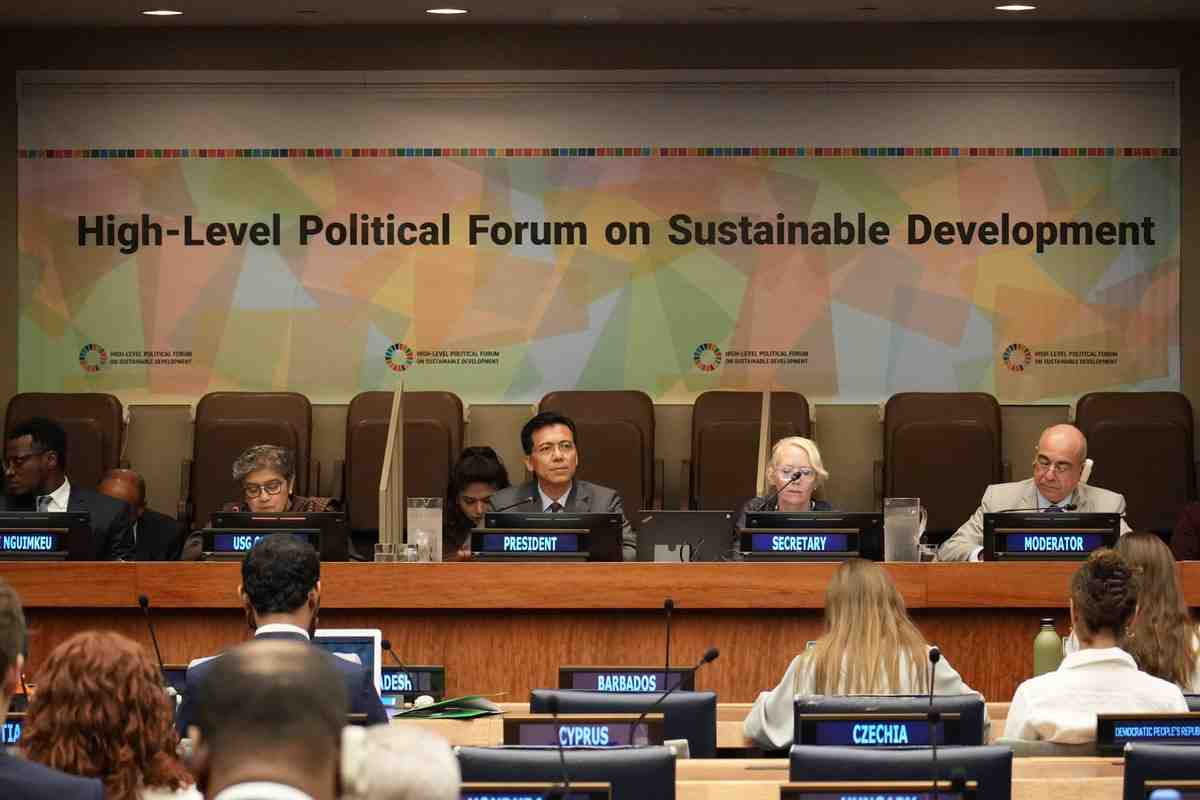




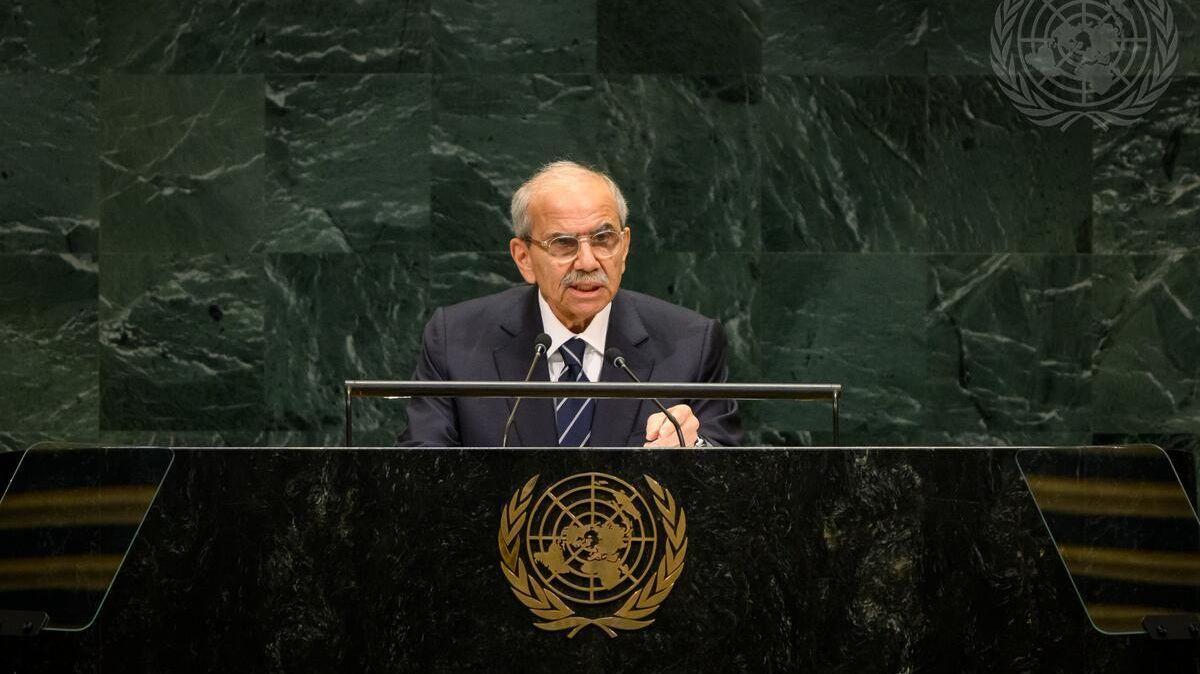
LEBANON - As world leaders gathered for the 81st session of the United Nations General Assembly in September, Lebanon participated in the high-level session, with Prime Minister Nawaf Salam representing the country at the UN General Assembly.
Sustainable development remained a key part of the global agenda. The session included a dedicated SDG Moment on 18 September, alongside discussions on climate action, development and the challenges facing countries as they work towards the 2030 deadline.
With less than four years left until 2030, the focus is increasingly shifting from commitments to implementation: how can countries turn the Sustainable Development Goals (SDGs) into measurable improvements in people’s lives?
A Difficult Road Ahead for Lebanon
For Lebanon, that task is particularly difficult.
The country has faced a prolonged economic and financial crisis, political and institutional challenges, and repeated security shocks. Years of conflict have added further pressure, affecting infrastructure, livelihoods and essential services. A World Bank assessment of the 2023–2024 conflict estimated its economic cost at $14 billion, while recovery and reconstruction needs reached $11 billion.
Lebanon ranks 121st out of 169 countries in the Sustainable Development Report 2026, with an SDG Index score of 62.9.
In an interview with Enmaeya, Manale Abou Dagher, MSc., Lead Sustainability Coordinator at the Office for Sustainability at the Lebanese American University (LAU), said Lebanon remains far from achieving the 2030 Agenda, explaining that the country faces a double challenge: accelerating development while recovering progress lost through successive crises.
Abou Dagher believes the SDGs should be part of Lebanon’s recovery. “Restoring education, healthcare, livelihoods, water and electricity must go hand in hand with reducing inequalities, protecting natural resources and strengthening institutions,” she said.
A Ranking That Does Not Tell the Whole Story
Abou Dagher cautions against reading Lebanon’s 62.9 score as meaning that the country has achieved 62.9% of Agenda 2030.
The index does not fully capture regional and social differences, service quality or local initiatives. Indicators may also refer to different reporting years.
For policymakers, she said, the focus should be on where conditions are worsening, who is being left behind, and which interventions can produce measurable improvements.
According to the 2025 UNDP-ESCWA assessment, Lebanon recorded declining trends in hunger, decent work and economic growth, sustainable cities, responsible consumption and production, and climate action. Progress in health, education, water and energy was stagnating.
For Abou Dagher, these issues are closely connected. A household that loses its income may struggle to afford food, healthcare and education at the same time. Electricity shortages can affect water supply, healthcare and economic activity.
She links these difficulties to weak governance, delayed reforms and limited investment in public services. The financial crisis and conflict then made them more severe.
From Commitments to Implementation
Lebanon established its National Committee on the SDGs in 2017 and presented its first Voluntary National Review in 2018.
For every proposed action, Abou Dagher said, there should be clear answers to four questions: Who will implement it? With what resources? Within what timeframe? And who will follow up?
Reliable data is also essential for measuring progress. Abou Dagher said Lebanon should make better use of existing information while investing in areas where data is missing or outdated.
“The real test is whether the information changes a decision: where funding goes, which communities receive support, or how a service is improved,” she said.
Areas Where Lebanon Can Still Advance
Water and energy are key priorities because improvements in these sectors can benefit healthcare, education, agriculture and businesses. Protecting education and primary healthcare is equally important, while supporting small businesses and farmers can help preserve livelihoods and create employment.
Climate change should also be addressed alongside water, energy and food security. Solar energy can reduce the cost of pumping water, for example, but cheaper pumping could increase groundwater extraction if it is not properly managed. This makes coordinated planning essential.
Universities can also contribute through education, research, community engagement and their own operations. At LAU, Abou Dagher said the university’s sustainability approach connects these areas.
She believes sustainability should become part of how students understand their disciplines, from engineering and business to health, architecture and social sciences.
What Would Progress Look Like by 2030?
For Abou Dagher, meaningful progress by 2030 would be visible in daily life: fewer families forced to choose between basic needs, fewer interruptions to education, better access to healthcare, water and electricity, more opportunities for decent work, cleaner air and water, and stronger protection of Lebanon’s natural environment.
Achieving this requires realistic priorities, clear responsibilities, budgets and timelines. Environmental protection and climate resilience should be integrated into development and reconstruction, while public institutions need to be strengthened.
As the world enters the final years of Agenda 2030, Lebanon’s challenge is not simply to recover from crisis. It is to use recovery as an opportunity to rebuild essential services, strengthen institutions and make development more sustainable and inclusive.
And this requires more than commitments and plans. It requires consistent follow-through, adequate resources and institutions capable of delivering measurable results.