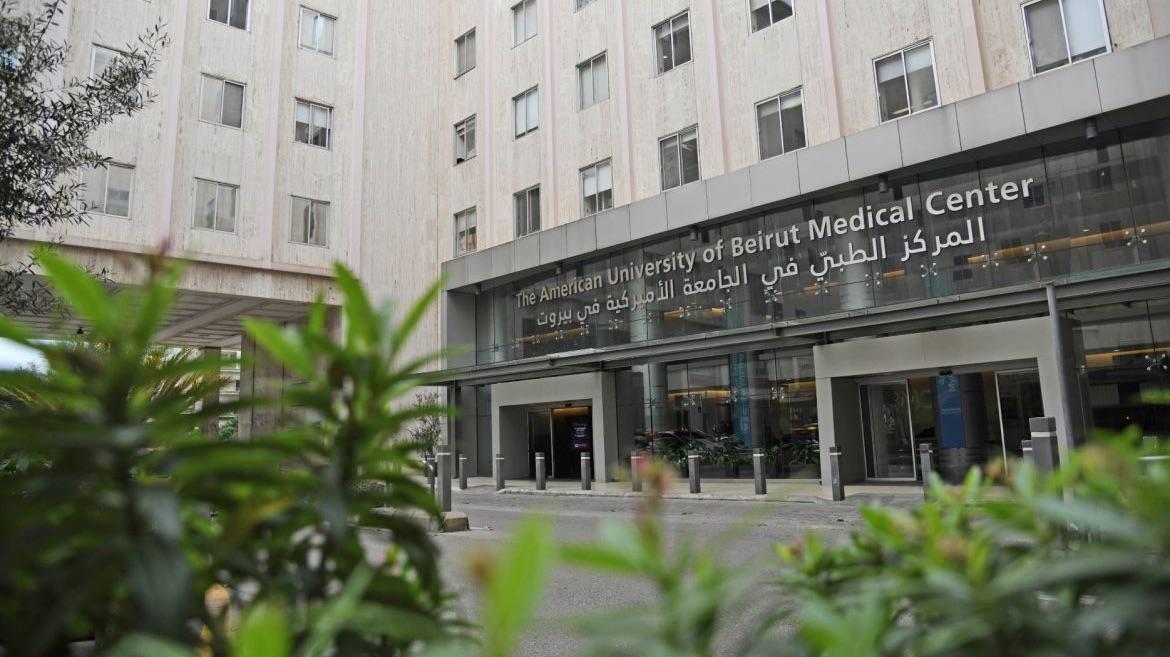
BEIRUT - The American University of Beirut Medical Center (AUBMC) has performed Lebanon’s first AngioVac procedure, using a minimally invasive technology to remove a large, life-threatening blood clot from the right atrium of a patient's heart.
The procedure was performed by AUBMC’s Structural Heart Disease Program on a 77-year-old woman whose age and medical history made conventional surgery and high-dose blood-thinning treatment unsuitable.
The intervention offers a new treatment option for high-risk patients in Lebanon and the region who cannot undergo major open-heart surgery or receive prolonged courses of medication to dissolve blood clots.
A Minimally Invasive Alternative
The AngioVac system is designed to remove large blood clots from the heart without requiring open-heart surgery.
During the procedure, doctors insert a funnel-shaped tube, known as a cannula, into a large vein in the patient's neck or groin. Using X-ray imaging and ultrasound, they guide the tube through the vein and into the heart until it reaches the clot.
A suction system then draws the clot into the tube. The blood passes through a filter that traps the clot, while the filtered blood is returned to the patient's body through a second tube inserted into another vein.
This approach allows doctors to remove the clot while reducing blood loss and avoiding the need to open the chest.
In the patient's case, the medical team selected AngioVac because conventional treatment options carried significant risks given her age and medical history.
Multidisciplinary and International Collaboration
The procedure was led by Dr. Fadi Sawaya, director of AUBMC’s Structural Heart Disease Program, with support from Dr. Ziad Ghazal in interventional cardiology and Dr. Amr Khalil in anesthesiology.
Dr. Walid Gharzeddine provided guidance in transesophageal echocardiography, an imaging technique that uses ultrasound to produce detailed pictures of the heart through the esophagus.
The team also received live remote support from Dr. Mohammad Hajji, an interventional cardiologist experienced in AngioVac procedures at Hamad Medical Corporation in Doha, Qatar.
Sawaya said the procedure gives high-risk patients a new option for removing large and dangerous blood clots from the heart without undergoing open-heart surgery.
He also thanked the medical teams involved in Beirut and Doha, describing the intervention as an example of what can be achieved through medical expertise, advanced technology and international cooperation.
Expanding Advanced Cardiac Treatment in Lebanon
Dr. Habib Daqiq, head of AUBMC’s Cardiology Division, said the first-of-its-kind procedure reflected the medical center’s commitment to providing advanced treatments to patients in Lebanon.
The AngioVac system adds to the center’s existing range of structural and interventional cardiology procedures, which use catheter-based techniques to treat heart conditions without conventional open surgery.
According to AUBMC, the technology is now available at the medical center for patients with life-threatening blood clots in the right atrium who may not be suitable candidates for more invasive treatment options