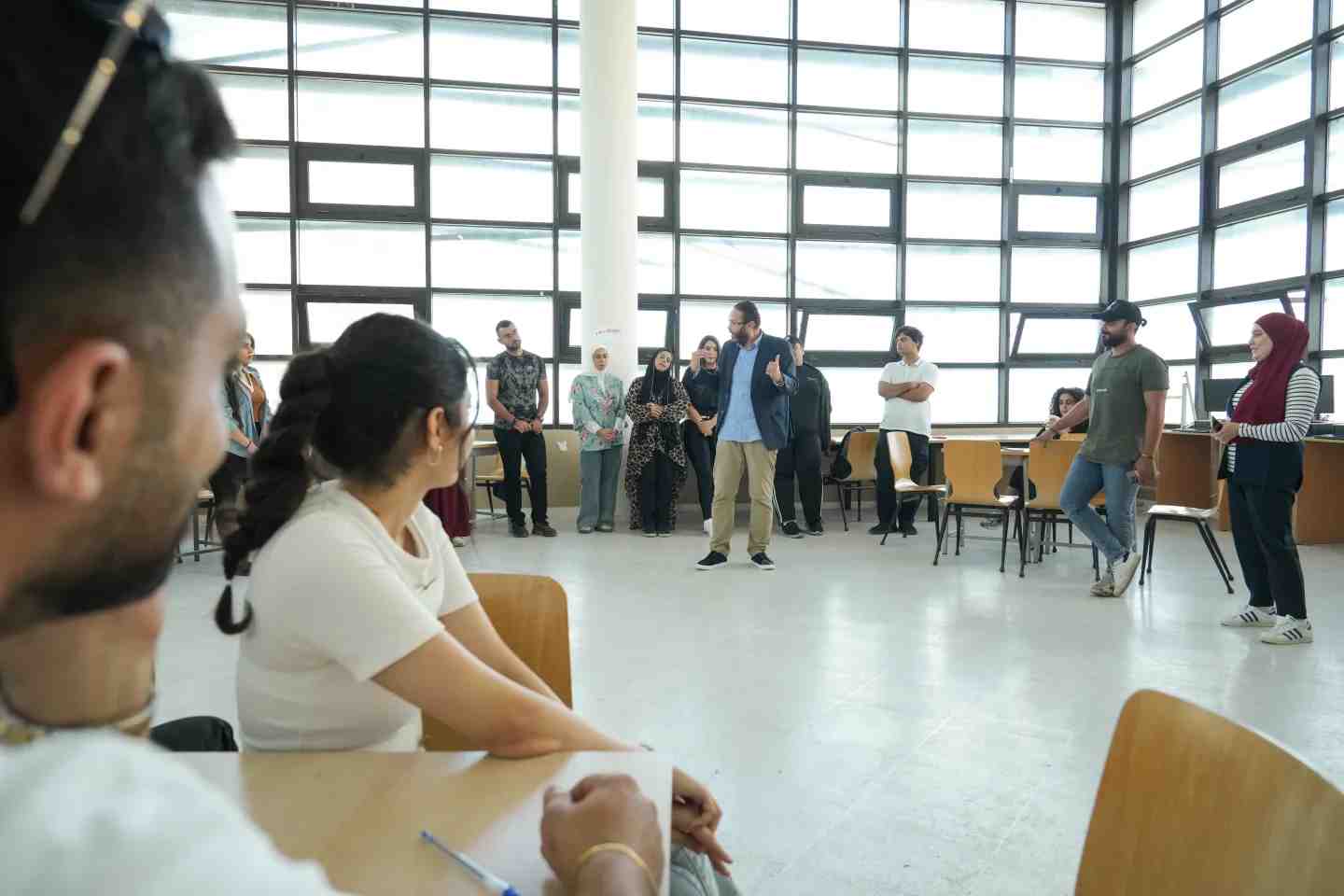
LEBANON – The International Labour Organization (ILO) convened a tripartite workshop in Lebanon on November 11, bringing together representatives of the Ministry of Labour, employers’ and workers’ organizations, international stakeholders and UN agencies to discuss a proposed roadmap for labour market governance, regularisation and mobility.
Developed jointly by the ILO, the United Nations High Commissioner for Refugees (UNHCR) and the International Organization for Migration (IOM), with support from the European Union and the Kingdom of the Netherlands, the proposed roadmap seeks to address longstanding challenges in Lebanon’s labour market and support national efforts to improve its governance.
Addressing Informal Employment and Workers’ Protection
Discussions focused on expanding access to regular employment, strengthening workers’ protection and addressing widespread informal employment, alongside evolving displacement and migration dynamics.
Speaking at the workshop, Labour Minister Mohamad Haidar said the initiative provided an opportunity for stakeholders to discuss challenges related to foreign workers, raise concerns and identify possible solutions. He stressed that the government’s objective is to ensure that foreign workers residing in Lebanon obtain legal status in accordance with Lebanese laws and residency requirements.
The roadmap proposes a phased and consultative approach based on social dialogue, stronger institutional capacity, targeted pilot initiatives and digitalisation efforts.
ILO Deputy Regional Director Claire Courteille-Mulder highlighted the importance of coordinated action between the government, employers and workers’ organizations, reaffirming the organisation’s commitment to supporting inclusive, rights-based approaches that promote decent work.
The European Union also stressed the importance of a transparent and regulated labour market for Lebanon’s economic recovery and social stability. Alessandra Viezzer, Head of Cooperation at the EU Delegation to Lebanon, said the EU was working with the Lebanese authorities and the ILO to make work-permit procedures more accessible, helping workers access decent employment while enabling employers to address labour shortages and compete fairly.
For her part, Netherlands Deputy Ambassador to Lebanon Marieke Wierda noted that regularisation goes beyond obtaining documentation, describing work permits and residency pathways as tools that can help protect workers, encourage responsible employment practices and support a more resilient economy.
A Coordinated Approach to Regularisation and Labour Mobility
The workshop also allowed participants to review recent labour market and mobility developments and identify practical priorities for action. Discussions took into account measures introduced in 2025 by General Security and the Ministry of Labour to facilitate regularisation pathways for foreign workers through sponsorship and work permits.
The initiative brings together the complementary roles of the three UN agencies: the ILO's expertise in employment and labour market governance, UNHCR's protection mandate and work on regularisation pathways for refugees, and IOM's expertise in migration governance and labour mobility.
The consultation process is supported through the PROSPECTS Partnership, funded by the Kingdom of the Netherlands, and the DAR programme, supported by the European Union.