




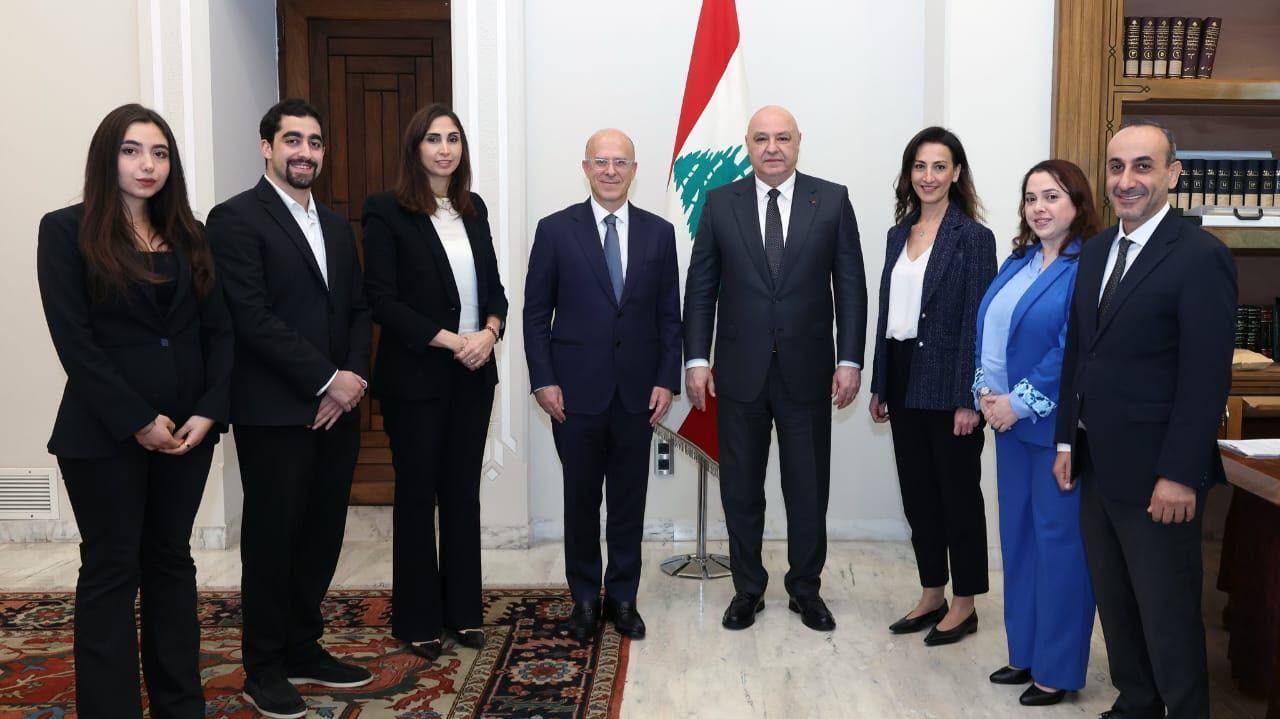
LEBANON - Lebanon may soon see some of its ministries abolished, others merged, and new ones created to meet the needs of a modern state. This is among the proposals of "Reinventing Government 2030," a national program to rebuild Lebanon's public administration. Minister of State for Administrative Reform Dr. Fadi Makki has presented its master plan and implementation roadmap to President Joseph Aoun, Speaker Nabih Berri and Prime Minister Nawaf Salam. It sets out 37 strategic reforms and around 100 opportunities to improve how the state performs, and is scheduled to be presented at the next Cabinet meeting.
Makki described the document as the first comprehensive plan to rebuild Lebanon's public administration since the era of President Fouad Chehab. The reference is significant, as it places the current effort within a reform tradition that dates back more than six decades.
Historical Roots: The Chehab Legacy
Fouad Chehab, Lebanon's third president, assumed office in 1958 following a period of political unrest. During his first year, his administration issued 162 legislative decrees to accelerate administrative reform. It also established institutions that remain in place today, notably the Civil Service Council, responsible for merit-based recruitment, and the Central Inspection, which monitors the performance of public servants and the quality of public services.
The term "Chehabism" was coined by journalist and minister Georges Naccache in 1960 to describe this approach to governance. Its central premise was that state reform and national development were inseparable, and that development should extend to all regions, particularly the most deprived, and to all segments of society.
This legacy remains a reference point in public debate. A recent discussion of Dr. Simon Kachar's book on Chehab at the Beirut International Arab Book Fair highlighted its continued relevance to the rule of law, accountable government and public trust, while also considering its limitations, including the balance between state authority and political freedoms.
The 2030 Masterplan: Diagnosis and Structure
The program is led by the Office of the Minister of State for Administrative Reform (OMSAR), established in the 1990s to support the rehabilitation of public administration after the civil war.
Launched at Baabda Palace on 1 September 2025, the plan responds to structural weaknesses identified by the ministry: outdated legislation, overlapping institutional mandates, and vacancy rates of approximately 70 percent across state administrations.
The implementation roadmap, which extends to 2030, is organized around three interconnected tracks. The first, governance and state organization, addresses the structure of the state, including which ministries and agencies are needed and how their mandates should be defined. The proposals to abolish, merge or create ministries fall under this track.
The second track, human resources, calls for a comprehensive assessment of public sector staffing and competencies to determine the positions and skills each administration requires. The third, public services and digital transformation, aims to simplify citizens' interactions with the state. The Dawlati platform, launched in July 2026 as a comprehensive platform for public services, represents an initial step, to be followed by a Citizen Charter and an annual index measuring citizens' trust in, and satisfaction with, public administration.
According to the ministry, measures ready for implementation will proceed, while proposals requiring legislation will be submitted to Cabinet before referral to Parliament. Consultations are planned with citizens, public employees, Parliament, political parties, the private sector, civil society, universities and international partners.
Why Institutions Matter
A substantial body of economic research links the quality of institutions to long-term prosperity. Daron Acemoglu, Simon Johnson and James Robinson were awarded the 2024 Nobel Prize in economics for work showing how institutions shape the economic trajectories of nations. For Lebanon, the effectiveness of public administration carries direct economic implications: it influences the delivery of public services, the transparency of public employment, the management of recovery and reconstruction funds, and the confidence of both citizens and investors in the state.
The Real Test: Earning Citizens' Trust
Lebanon is undertaking this reform under demanding conditions, including post-war recovery, constrained public finances and a shifting regional environment. Such periods, however, are also those in which the capacity of the state matters most. The program's stated objective is a public administration that earns citizens' trust and delivers better services, and the planned annual trust index will offer a public measure of whether that objective is being met.