



Millions of people travel annually to receive medical services, contributing to a global multi-billion-dollar industry that is reshaping healthcare markets and the landscape of medical tourism.
In this context, Lebanon has a long-standing reputation for providing high-quality medical services, earning it the title of the “Hospital of the Middle East” for many years. However, recent economic challenges, declining digital infrastructure, and limited investment in healthcare have reduced the capacity of the private health sector to maintain its leading position in medical tourism.
To understand the current reality, a comprehensive assessment was conducted on the websites of private hospitals in Lebanon to measure their readiness to attract international patients and support the medical tourism sector. The study reviewed all private hospital websites in Lebanon, totaling 112 according to Ministry of Health data. However, the results revealed a structural problem in the digital sector, as 44 websites were non-functional and excluded from evaluation, narrowing the analysis to 68 active websites only.
The assessment tool covered three core dimensions: accessibility, institutional credentials, and communication. Together, these dimensions capture key patient considerations, including ease of navigation, information quality, service transparency, and available communication channels. Each dimension was weighted using mandatory and optional criteria, enhancing the precision and depth of the results.
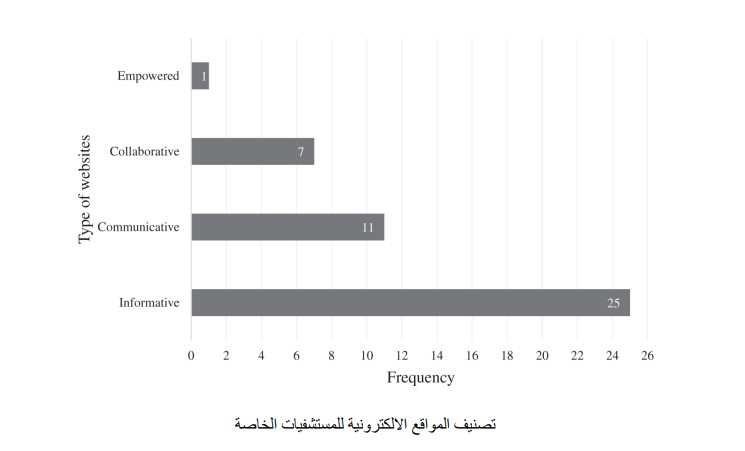
The study revealed that most hospitals in Lebanon do not provide clear information about costs, insurance coverage, medical staff qualifications, or treatment guidelines before and after surgeries, which reduces patient trust. Some hospitals have shown signs of progress, such as offering treatment packages for foreign patients, information on international insurance, and showcasing specialized medical services; however, these initiatives remain individual efforts and are not systematically implemented at the national level.
Key challenges identified by the study include:
Lack of communication in languages other than English and Arabic.
Weak informational and guidance content.
Shortage of immediate support services.
Absence of patient follow-up systems, such as telemedicine or structured plans for international patients after they return to their home countries.
Based on the findings, the study highlights scientific recommendations that hospitals, ministries, and the private sector can adopt:
Build a modern, multilingual digital presence.
Establish specialized hospital units for international patient services.
Strengthen international partnerships through collaboration with insurance companies and participation in global medical conferences.
Develop comprehensive medical services, including accommodation, transportation, and translation.
Promote transparency and build trust by publishing costs, documenting qualifications, showcasing patient reviews, and sharing safety and quality protocols.
Integrate telemedicine services.
Align efforts with government policies to launch a national medical tourism campaign and provide incentives for institutions that enhance their international services.
Lebanon possesses the medical and human resources necessary to reclaim its position as an advanced medical destination, but this requires organized development that includes digitization, transparency, partnerships, and supportive services before and after treatment. The study also emphasizes the importance of assessing the readiness of private hospitals, as they provide a clear roadmap that decision-makers and hospitals can follow.
Investing in international health services is not a secondary option—it is an opportunity to restore economic growth, improve healthcare quality, and present a positive image of Lebanon on the global stage.
Charbel Sweidy is a licensed Physical Therapist (PT, MPT, MHA) and Team Lead in the Physical Therapy Department at the American University of Beirut Medical Center (AUBMC).