

WORLD - The world is going through a transition that extends well beyond stalled progress on the Sustainable Development Goals or shrinking development finance.
As governments race to recover lost ground on the SDGs, the central question may no longer be simply why implementation remains weak. A more difficult question is emerging: what is making development itself harder to deliver?
Answering it requires a wider lens. Geopolitical fragmentation, tighter fiscal space, technological change, demographic pressures, and shifting patterns of global investment are reshaping the environment in which development takes place. The assumptions behind many of our policies, institutions, and development models may no longer hold as firmly as they once did.
If that is true, accelerating progress will require more than implementing existing solutions faster. It may require asking whether the frameworks guiding those solutions still fit the world they are meant to change.
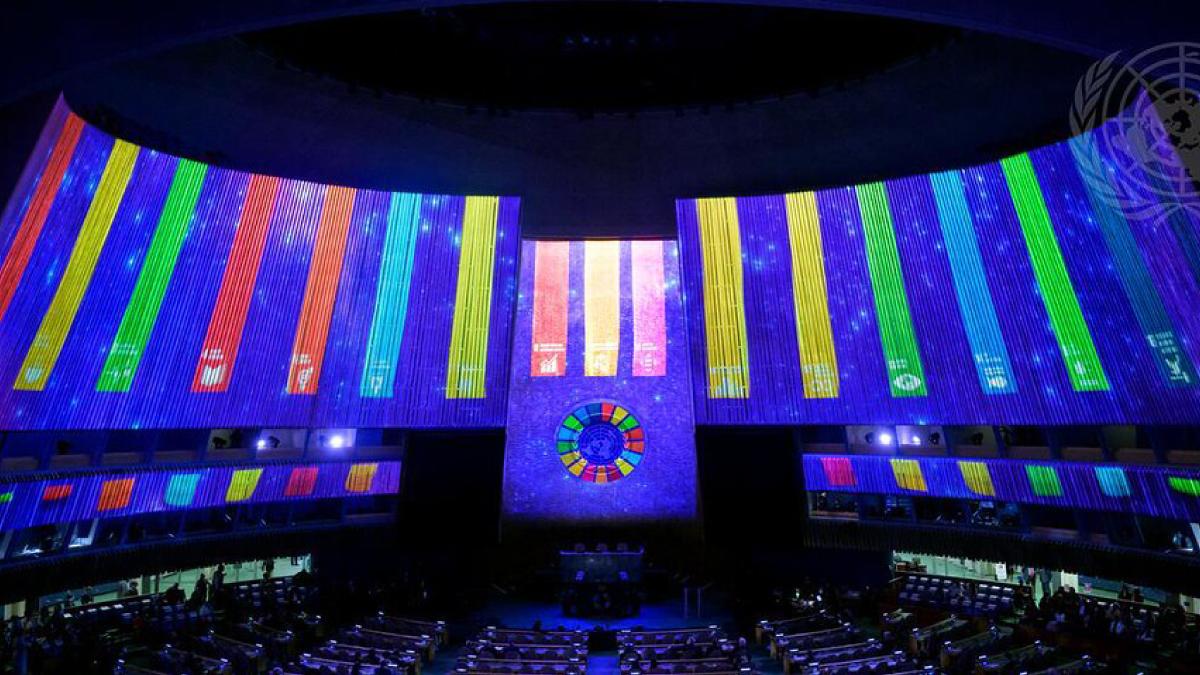
On 23 September 2026, the 81st UN General Assembly will convene a high-level meeting marking the 40th anniversary of the Declaration on the Right to Development, alongside an SDG Moment. The timing brings two related questions into the same political space: how can development progress be accelerated, and what does the right to development mean forty years after its adoption, in a world very different from that of 1986?
The original Declaration placed the human person at the centre of development, not merely as a beneficiary, but as an active participant. It emphasized meaningful participation and the fair distribution of development benefits.
Forty years later, AI makes those principles newly relevant.
A Shifting Financial Landscape
Traditional development resources are shrinking quickly. According to preliminary OECD data, Official Development Assistance fell by 23.1% in real terms in 2025, to USD 174.3 billion, the largest annual decline on record.
At the same time, enormous amounts of capital are flowing into AI and the infrastructure behind it: data centres, semiconductors, computing capacity, energy, and research.
This is not simply a story of scarcity. It is also a story of reprioritization.
The question is increasingly which countries can attract these investments, translate them into productivity and domestic capability, and move up the technological value chain, and which risk remaining on its margins.
Debates over the future of aid are already moving in a similar direction: away from financing individual projects alone and toward strengthening institutions, domestic resources, human capital, and productive capacity.
That does not make aid less important. In health, education, humanitarian response, and fragile settings, it remains essential. But it does raise a broader question: should development cooperation be judged only by how much financing it provides, or also by whether it helps countries build the systems needed to shape their own development trajectories?
From Digital Inclusion to Technological Capability
AI makes that question harder to ignore.
If future economic capacity increasingly depends on data, computing power, skills, research, and digital infrastructure, the next development divide may not simply be about income or internet access. It may increasingly be a divide in technological capability.
Having internet access, or even access to AI tools, is not the same as possessing that capability.
The more important question is whether countries can use AI productively, adapt it to local needs, govern it, participate in its development, and capture a meaningful share of the economic and social value it creates.
Without those capabilities, a new form of technological and knowledge dependency could emerge. Development policy may therefore need to move beyond the familiar language of “digital inclusion” toward a much broader question of technological agency.
A Policy Sequence, 2024–2026
Recent international agreements suggest that this shift is already underway.
The Compromiso de Sevilla, adopted at the 2025 Fourth International Conference on Financing for Development, goes beyond the financing gap. It emphasizes national policy space, domestic resource mobilization, and capacity-building, while also calling for greater investment in digital infrastructure, research, and AI capabilities in developing countries, as well as their meaningful participation in international AI governance.
Technology, in other words, is no longer simply a tool for development. Technological capability is increasingly becoming part of development capacity itself.
Sevilla forms part of a wider sequence.
The 2024 Pact for the Future linked development to questions of global governance, peace, security, and technology. The Global Digital Compact pushed the digital debate beyond connectivity toward data, AI, and governance. Sevilla connected financing with domestic capacity and technology. The Doha Political Declaration, adopted in November 2025 at the Second World Summit for Social Development, returned the focus to people through poverty reduction, decent work, and social protection.
Together, these frameworks point toward a development debate that is becoming broader, more interconnected, and harder to separate from the technological and geopolitical transformations taking place around it.
Revisiting the Right to Development
The 40th anniversary of the Right to Development at UNGA 81 offers an opportunity to bring these strands together.
If knowledge, data, and AI increasingly shape productivity, education, public services, and state capacity, then development may also need to address a country’s ability to participate in developing, adapting, and governing technology, and to benefit fairly from the value it creates.
That does not mean turning the right to development into a “right to AI.” It means reconsidering what capability, agency, and equity look like when the sources of economic power themselves are changing.
AI also brings the role of the state back into focus. Benefiting from technological change requires strategic investment in education, research, infrastructure, skills, and data governance.
And beneath all of this lies a distributional question: who captures the productivity gains AI generates?
Economic output can rise while inequality widens. Productivity can improve while economic insecurity deepens. Technological progress, by itself, does not determine how its gains are distributed.
That remains a political and development choice.
From Access to Agency
The shift taking place may therefore be less about new tools than about a new emphasis on agency: from aid toward capability, from access toward participation, and from digital inclusion toward technological capacity.
This does not mean abandoning aid, nor does it mean that development can be reduced to acquiring technology. It means enabling countries to set priorities, build domestic capabilities, adapt technology to their own needs, and capture a fair share of the value it generates.
People, equity, and the right to development must remain at the centre of that transition.
In the AI age, the question may no longer be only how technology can be used for development. It may increasingly be whether societies have the capability and agency to shape the technological future being built around them.
The question, then, is not simply whether development needs better tools.
It is whether the development model itself needs updating.