






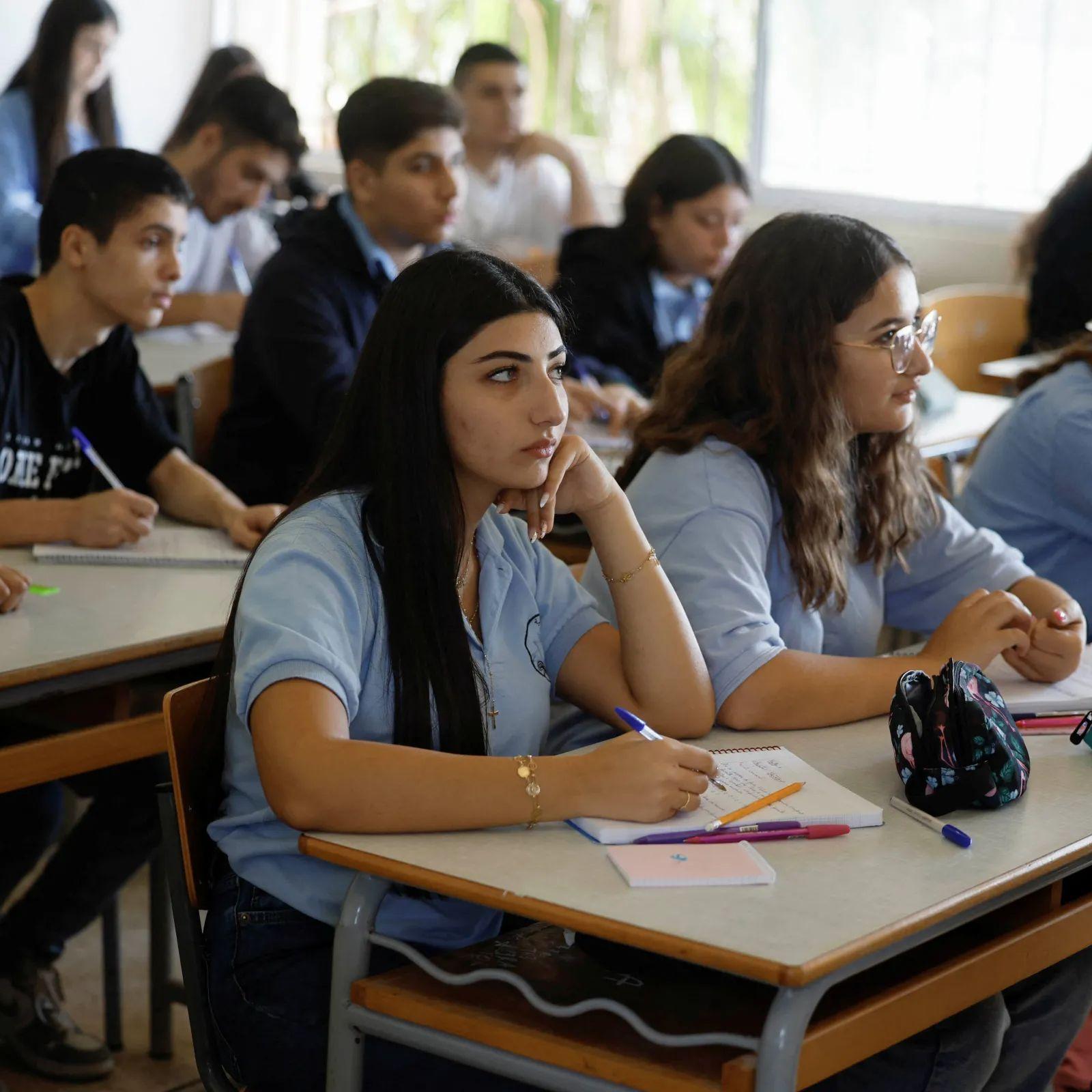
In stable societies, children grow up learning how to plan their career paths and contribute to the development of their communities. There, the question is: What do I want to become? But in societies facing overlapping crises, the question changes: How do I survive?
Education is a space for acquiring knowledge and experience, discovering interests, and shaping the future. Yet this natural path is disrupted when a country faces economic, social, and political crises, as is the case in Lebanon today. Since 2019, Lebanon has been experiencing an unprecedented economic collapse. Households’ purchasing power has declined, the Lebanese pound has lost much of its value, and prices have risen sharply, making school supplies a heavy burden for many families. As a result, some students have been forced to leave school and enter the labor market to help support their families. In some cases, parents have even encouraged their children to work instead of continuing their education.
In addition to the economic crisis, public education has faced further challenges. Strikes have expanded and slowed down the learning process, creating a clear gap between public and private education in terms of school regularity and curriculum quality. As these crises accumulated, a university degree was no longer seen by many young people as a guaranteed path to stability. Instead, it became, in some cases, merely a piece of paper hanging on a wall, amid the scarcity of job opportunities. This reality has created frustration and fear among students and weakened their motivation to contribute to the development of their society.
UNICEF data indicates that 31% of young people in Lebanon are not in education, employment, or training. Regular school attendance has also dropped from 60% to around 43% within two years, while unemployment among young people aged 15 to 24 has risen to 47.8%.
These conditions have changed students’ mindsets. Many now search for opportunities to migrate more than opportunities for local development, and they have become more skilled at calculating exchange rates than at drawing up career plans. In this way, education has shifted from a means of building the future into a ticket out, and society has lost its youth as a core investment.
Addressing Lebanon’s education crisis does not require perfection, but effectiveness. A starting point would be to support students most at risk of dropping out through financial assistance conditional on attendance, alongside psychological and career guidance within schools. Curricula must also be linked to the labor market through technical and vocational education, expanded practical training, and incentives for companies to hire graduates. Supporting small businesses through soft loans is also an essential step toward creating local job opportunities. Brain drain can also be reduced through scholarships conditional on return, as well as by establishing networks with Lebanese talent abroad.
In conclusion, restoring the role of education cannot be achieved through slogans, but through practical policies that return education to its fundamental purpose: building people so they can build their country. Every young person who finds a real opportunity in their own country is a long-term investment, while every talent that emigrates without hope of returning is a loss that is difficult to replace. Linking education to development is an existential necessity for Lebanon’s future. Can Lebanon make staying a choice of ambition rather than an act of necessity?
Aya moutaz al taweel