


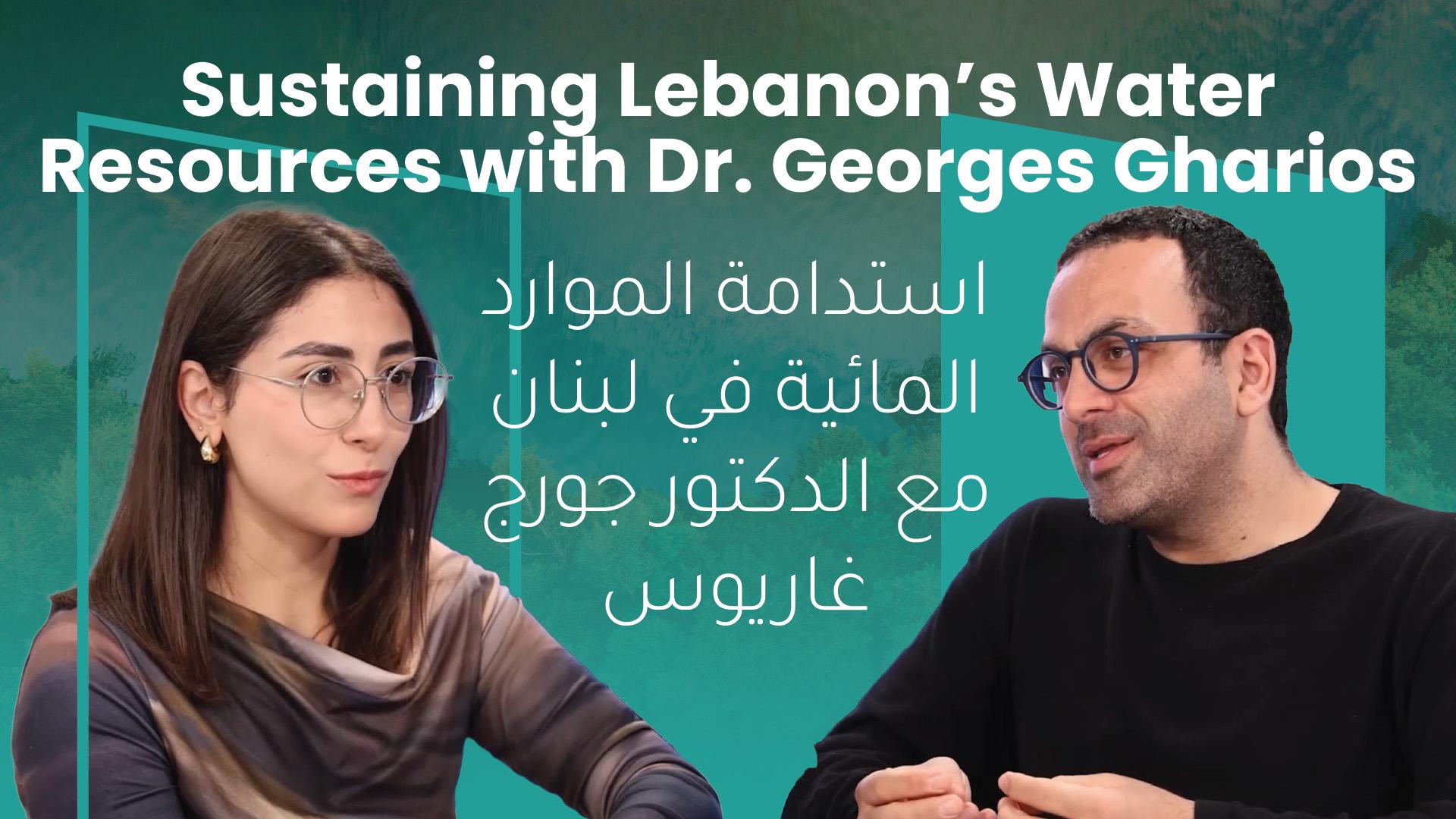
This episode explores what water sustainability truly means in Lebanon, meeting today’s needs without compromising the rights of future generations. Moving beyond the idea of simple water availability, the conversation reframes sustainability as a question of governance, protection, efficiency, and long-term resilience.
In this interview, agricultural engineer and water governance expert Georges Gharios explains how changing climate patterns are reshaping Lebanon’s water resources. Declining snow cover and increasingly unpredictable rainfall are affecting rivers, groundwater recharge, and overall water balance, creating growing uncertainty for households and agricultural communities alike.
The discussion also addresses wastewater management and the environmental and public health risks that arise when treatment systems are weak or underperforming. In agriculture, the country’s largest water user, Gharios highlights how variable weather affects crop yields and why water-smart practices and more efficient irrigation are essential to conserve resources while safeguarding farmers’ livelihoods.
The episode further examines Lebanon’s national water strategy, existing legal frameworks, and ongoing reform efforts aimed at strengthening governance and improving service delivery. The central message is clear: sustainable water management requires not only infrastructure, but accountability, coordination, and a shift in both policy and behavior.
By grounding complex issues in practical realities, this episode positions water sustainability as a foundation for resilience, food security, public health, and long-term national stability.