


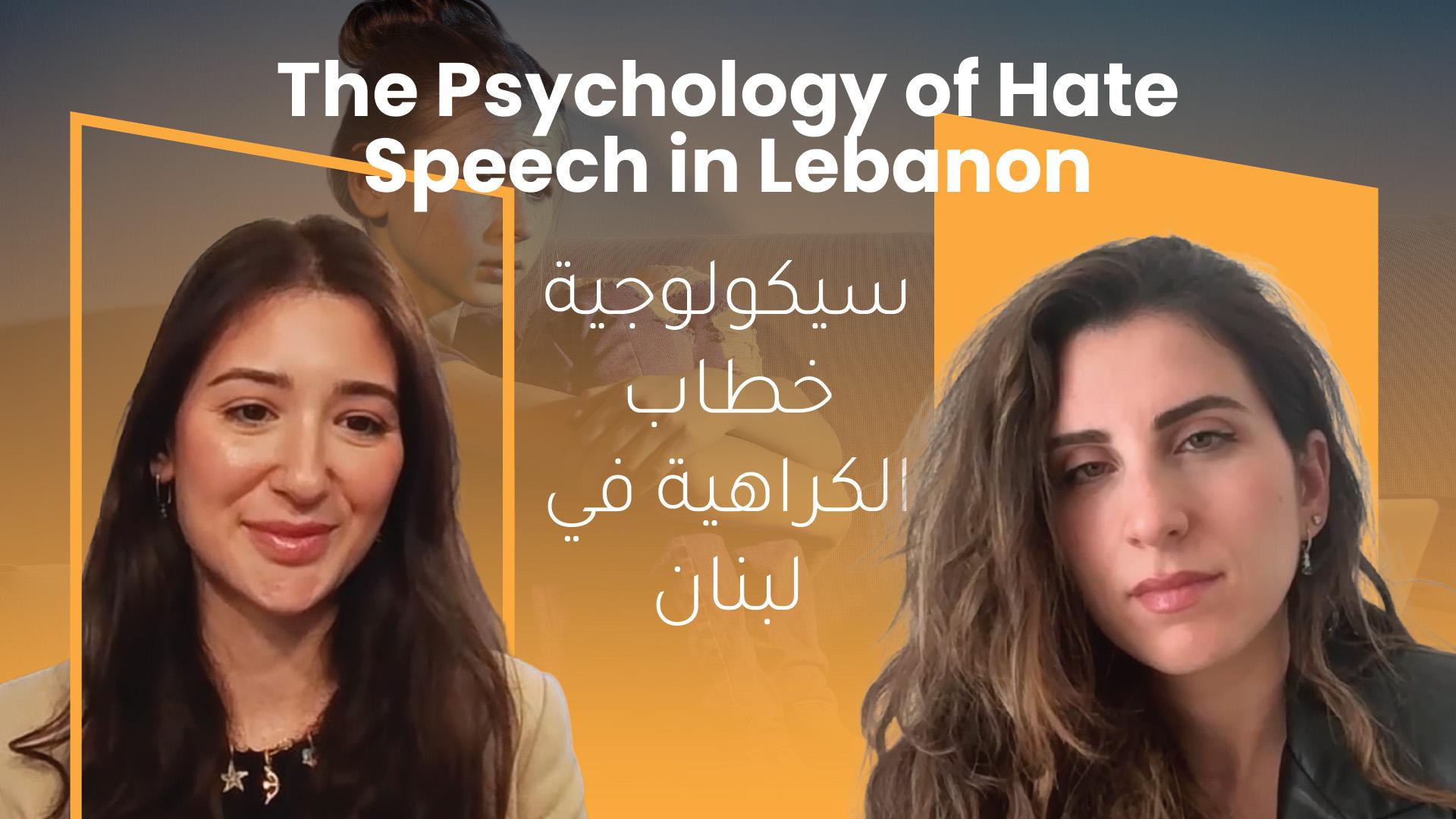
At a time when public discourse is increasingly shaped by polarization, fear, and social tension, this episode opens a critical conversation on the psychological and societal impact of hate speech in Lebanon.
Featuring Christina Riachi, the discussion explores why hate speech emerges, especially during periods of uncertainty, conflict, and collective stress, and what drives individuals and groups to adopt harmful or divisive language.
The episode examines how hate speech affects mental health, not only for those directly targeted, but also for communities exposed to repeated hostility, stigma, and dehumanizing rhetoric. From anxiety and emotional distress to social fragmentation and the erosion of trust, the consequences often run deeper than words alone suggest.
The conversation also looks at the psychological mechanisms behind hate speech, including fear, projection, identity threats, and group dynamics, while asking an urgent question: how can societies interrupt these patterns and foster healthier, more responsible ways of communicating?
In a country navigating layered crises, this episode highlights a simple but urgent idea: language shapes social reality, and the words we normalize can either deepen division or help build understanding.
If you want titles that lean more “controversial,” more academic, or more Enmaeya-style with a sustainability/social cohesion angle, I can give you those too.