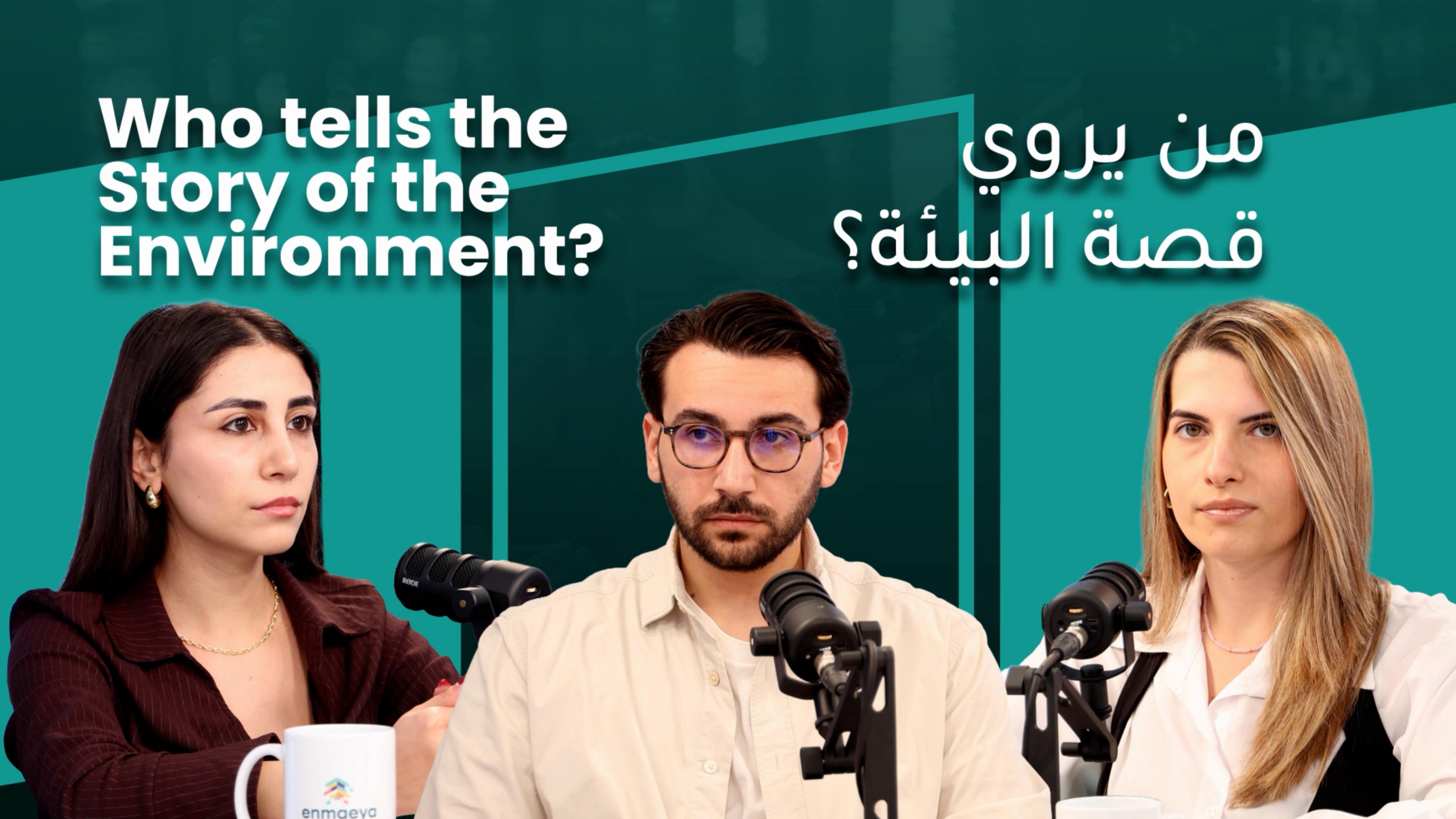
On the occasion of World Environment Day, this episode explores the critical role of environmental journalism in shaping public awareness, accountability, and decision-making in Lebanon.
As the country continues to face environmental challenges ranging from pollution and biodiversity loss to waste management, coastal degradation, and the impacts of conflict, one important question emerges: who is telling these stories, and how are they being told?
In this discussion, environmental specialists Rachelle and Kareem join journalist Maria to examine the current state of environmental journalism in Lebanon, the gaps that still exist in environmental reporting, and the opportunities for creating more accurate, accessible, and impactful environmental content.
The conversation explores why environmental stories often receive attention only during crises, the challenges journalists face when reporting on complex environmental issues, the importance of Arabic-language environmental content, and the growing need for stronger collaboration between experts, media professionals, universities, and public institutions.
Through local case studies including coastal pollution, fisheries, the blue economy, and environmental impacts linked to conflict, the episode highlights how evidence-based reporting, field storytelling, scientific data, and public-interest journalism can help citizens better understand environmental issues and engage in meaningful solutions.
The discussion also showcases emerging environmental journalism initiatives in Lebanon and the wider region, while offering practical recommendations for strengthening environmental reporting through training, access to information, and more diverse storytelling formats.
This episode is part of Enmaeya's ongoing commitment to making environmental issues understandable, relatable, and connected to people's daily lives through interviews, documentaries, explainers, youth engagement, and public-interest storytelling.