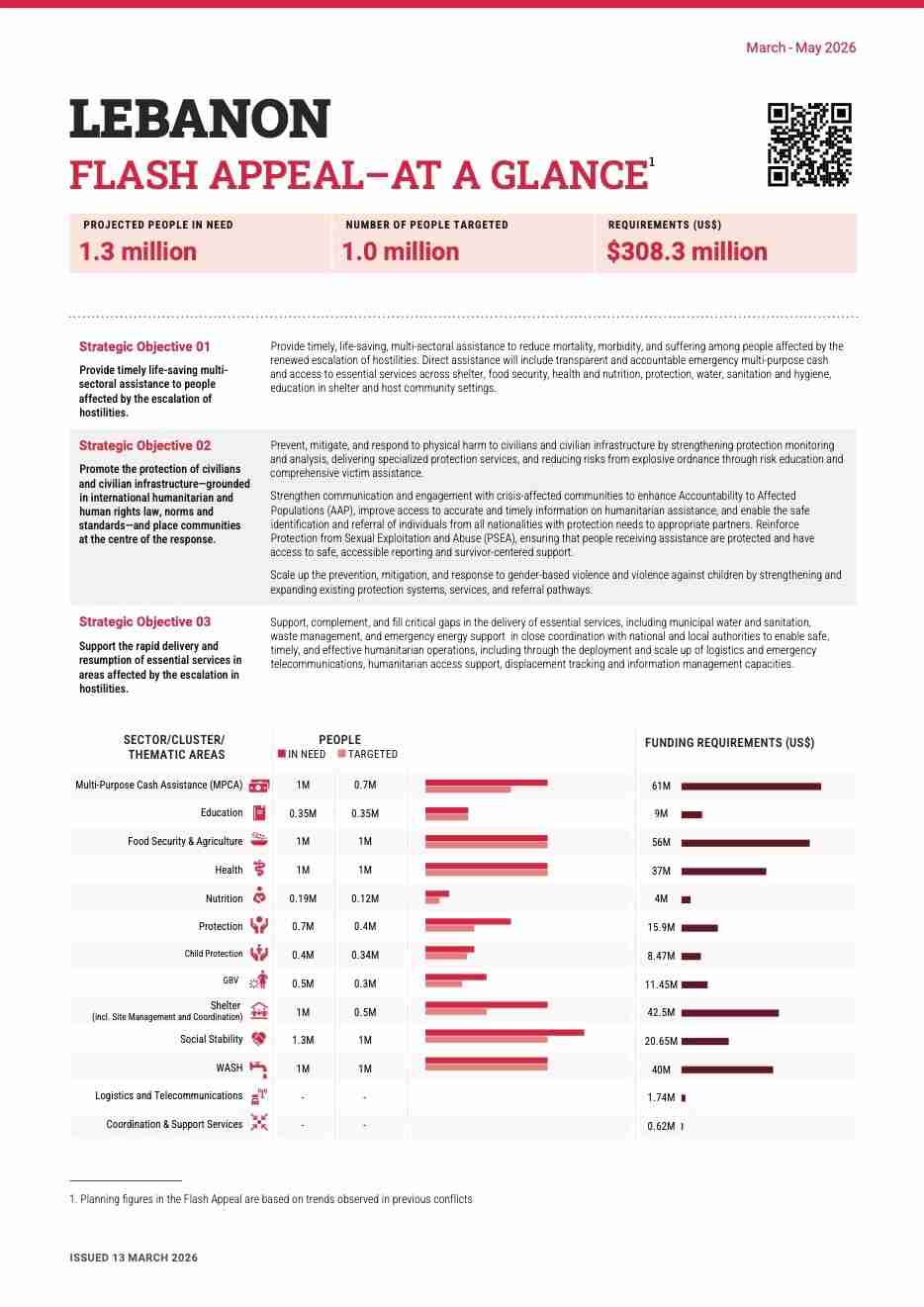




The Lebanon Health Emergency Situation Update #15 was published on 31 March 2026 by the World Health Organization (WHO). The report outlines the deteriorating health and humanitarian situation in Lebanon following 30 days of escalating hostilities, detailing casualty figures, displacement trends, and the growing strain on the country's health infrastructure. It aims to inform emergency response efforts and highlight urgent needs across trauma care, primary healthcare, disease surveillance, and the protection of vulnerable populations.
Key Insights:
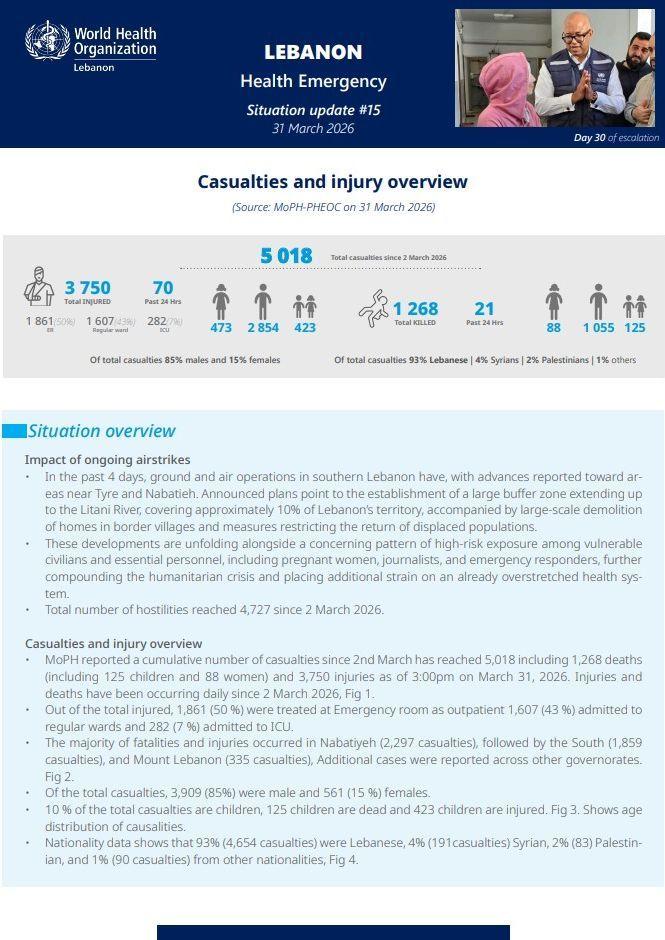
Casualties & Injuries
5,018 total casualties since 2 March 2026: 1,268 killed (including 125 children and 88 women) and 3,750 injured
21 deaths and 70 injuries recorded in the past 24 hours
Nabatiyeh is the hardest-hit governorate (2,297 casualties), followed by the South (1,859) and Mount Lebanon (335)
85% of casualties are male; 93% are Lebanese nationals
Displacement
Over 1.16 million people self-registered as displaced; 136,201 are in 669 collective shelters
Vulnerable groups in shelters include 47,110 children, 6,300 elderly, and 2,469 people with disabilities
Beirut and Mount Lebanon host the majority of shelter populations (33% and 34% respectively)
Healthcare System Under Attack
88 attacks on healthcare facilities recorded since 2 March, resulting in 128 injuries and 52 deaths among health workers
4 hospitals fully closed; 10 partially damaged; 49 primary health care centers (PHCs) closed
Hospital occupancy reaching up to 95% capacity
Primary Healthcare Response
157 PHCs linked to 558 shelters, providing 51,648 consultations and medications to 38,629 IDPs
Emerging risks include scabies (120 cases), lice (888 cases), hygiene issues, and medication supply constraints
81 PHCs have psychiatric and mental health support available
WHO Response
A major shipment of trauma kits, medicines, and surgical supplies — dispatched via land from Dubai — is expected to assist ~6,000 trauma patients and ~4,000 diabetic patients
WHO is supporting the MoPH hotline (1787), which has received 7,502 calls since early March
The WHO Health Emergencies Programme Executive Director visited Lebanon, stressing the urgent need for sustained international assistance
Epidemiological Alerts (Epi Week 13)
8 signals reported; 6 requiring investigation — alerts include measles, malaria, acute diarrhea, food poisoning, and lice/pediculosis, particularly in IDP shelters