
International Disaster Resilience Leaders Forum Incheon 2023: Final Report is a final report prepared by the UNDRR Office for Northeast Asia for the International Disaster Resilience Leaders Forum Incheon 2023, held on 18–19 September 2023 in Incheon, Republic of Korea. The forum focused on “Enabling technological application and partnership for climate and disaster risk reduction.”
Key insights:
The report presents the outcomes of the second edition of the International Disaster Resilience Leaders Forum, organized by Incheon Metropolitan City, the Incheon Institute, and UNDRR, with support from the Ministry of the Interior and Safety of the Republic of Korea, and in cooperation with the Trilateral Cooperation Secretariat.
The forum built on the Midterm Review of the Sendai Framework for Disaster Risk Reduction 2015–2030, especially its call for stronger risk governance, investment, early warning systems, local action, and the use of science, technology, and innovation for disaster risk reduction.
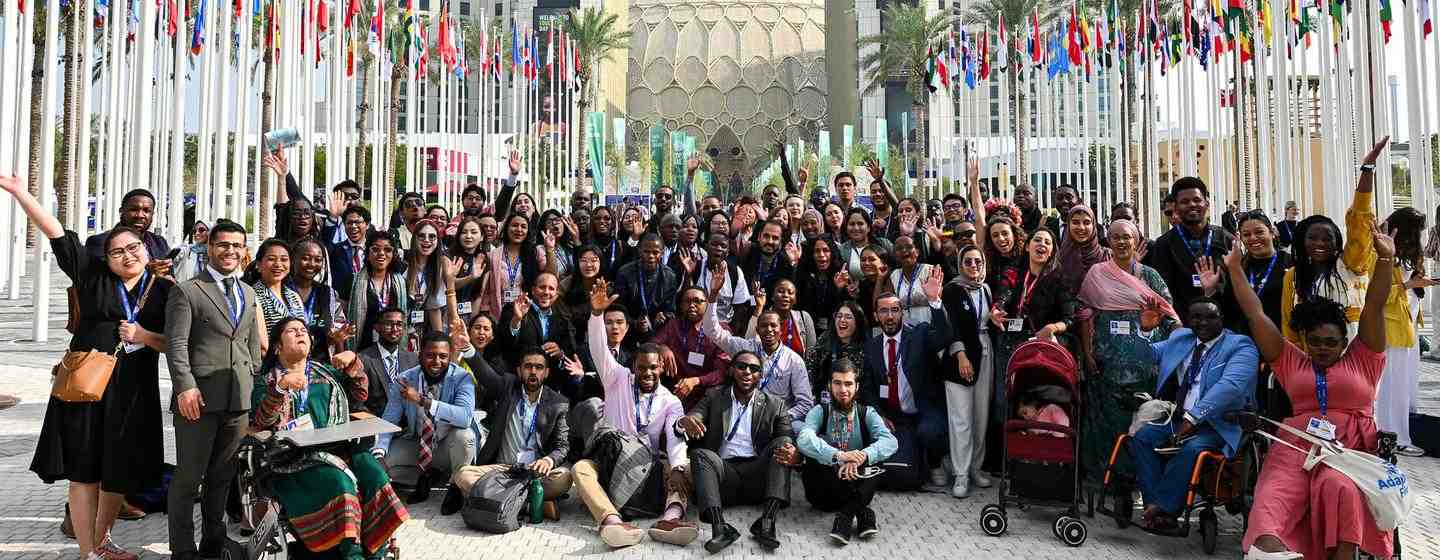
The forum brought together more than 370 participants, including 75 leaders and representatives of national and local governments from 25 countries and 31 cities across all continents.
Participants included national and local government leaders, technical experts, academia, international and regional organizations, the private sector, and representatives from least developed countries, landlocked developing countries, and small island developing states.
Across two days, the forum included five thematic sessions and two city networking events, where participants exchanged experiences on innovative technologies, partnerships, climate adaptation, and disaster resilience.
The opening remarks emphasized that disasters are becoming increasingly compound, complex, and cross-sectoral, and that no single country or city can address them alone. Speakers highlighted the importance of partnerships among governments, citizens, academia, businesses, and cities.
A key message from UNDRR was that science, technology, digital innovation, and emerging technologies can strengthen disaster risk governance, multi-hazard forecasting, and early warning systems.
The first session focused on Northeast and Southeast Asia leaders’ experiences. Countries such as Japan, the Republic of Korea, Mongolia, Indonesia, Malaysia, the Philippines, Singapore, Thailand, Timor-Leste, and Viet Nam shared examples of earthquake risk management, early warning systems, AI, big data, seismic sensors, ICT tools, and regional cooperation.
The Northeast Asia discussion highlighted the importance of strong national coordination systems, including disaster risk reduction laws, committees, emergency operation centres, and mechanisms for information exchange across levels of government.
The Southeast Asia discussion emphasized the role of advanced technologies such as artificial intelligence, big data analytics, data platforms, seismic sensors, warning applications, and ICT in strengthening disaster preparedness and response.
The second session presented urban best practices from Northeast and Southeast Asia. Incheon showcased flood management technologies, including flood detection sensors, IoT gateways, and water-level sensors. Sendai presented the Sendai Bosai Tech Innovation Project, which connects disaster risk reduction, technology, and business innovation.
Other city examples included Kuala Lumpur’s Climate Action Plan 2050 and flood mitigation projects, and Bangkok’s resilience plan using automation, IoT, and an online local-level risk map.
The third session focused on MCR2030 cities globally. Examples included Dosquebradas in Colombia, the West Coast Region in The Gambia, Windhoek in Namibia, and Matosinhos in Portugal, all using tools such as crisis rooms, early warning systems, drones, GPS, GIS, and web-based platforms for risk management.
The fourth session examined technology for climate change and disaster risk reduction. Examples included spatial risk assessment in Guangzhou, AI-based water management in Japan, zero-energy housing solutions, and Korean technologies that combine real-time IoT data, GIS, and artificial intelligence for disaster management.
The report notes that technology can support disaster signal detection, response, management, recovery, and risk assessment. However, challenges remain, especially in developing countries where local-level datasets, technical capacity, and financing are often limited.
The fifth session focused on global cooperation and partnerships. Participants stressed that climate change and disasters exceed the capacity of any single institution, making cooperation across governments, cities, development actors, humanitarian actors, academia, the private sector, and communities essential.
The city networking events showcased experiences from cities in Asia, Africa, South America, and the Caribbean. Examples included Baguio City’s smart command centre and flood early warning systems, Pakse City’s flood and landslide barriers along the Mekong River Basin, Quito’s volcanic risk awareness platform, and Portmore’s youth-focused community outreach for disaster preparedness.
The report also describes the Disaster Safety Exhibition, which included the MCR2030 Resilience Hub Exhibition, the Korean School Safety Programme, and Incheon’s smart disaster management technologies, including a digital twin-based fire response platform and an old facility safety management system.
A field visit introduced participants to Songdo’s sustainability and smart city infrastructure, including the Songdo Incinerator and Central Park, highlighting eco-friendly environmental infrastructure, food recycling technologies, and sustainable urban development.
The feedback section shows strong satisfaction among participants. 97% of survey respondents rated the forum as “Excellent” or “Very good,” and 84% rated the organization and logistics as “Excellent” or “Very good.”
Participants reported that the forum helped them learn about technology for disaster risk reduction, early warning systems, MCR2030, and good practices from other cities. They also valued networking and the opportunity to exchange experiences.
Suggested improvements included making sessions more interactive, creating smaller discussion groups among cities, allowing more time for speakers, organizing more side events and field visits, inviting more technical-level officials, and discussing technology gaps, technology transfer, and disaster risk financing.
Main message: The forum showed that technology can play a major role in strengthening climate and disaster resilience, especially through early warning systems, risk mapping, GIS, AI, IoT, digital platforms, and smart city tools. However, technology must be paired with inclusive governance, financing, capacity-building, local action, partnerships, knowledge exchange, and people-centred approaches to ensure that cities and communities can reduce risk and adapt to climate change effectively.