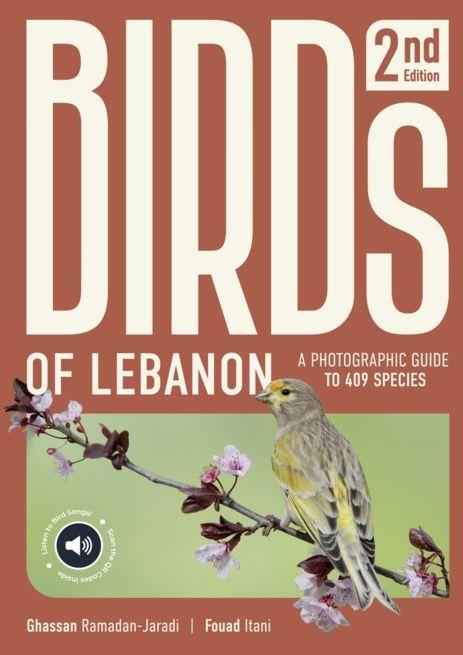

Birds of Lebanon: A Photographic Guide to 409 Species - Second Edition is a photographic field guide / guidebook published in 2026 by UNDP, with texts and photos by Ghassan Ramadan-Jaradi and Fouad Itani. It documents 409 bird species recorded in Lebanon up to December 2025 and is designed as a practical reference for birdwatchers, conservationists, educators, responsible hunters, researchers, and nature enthusiasts.
Key insights:
The guidebook presents Lebanon as a country of major ecological importance, located along one of the world’s most significant migratory bird routes, the African-Eurasian flyway. Every spring and autumn, large numbers of migratory birds pass through Lebanon, using its forests, wetlands, mountains, coastal areas, and protected zones as resting and feeding sites.
The publication highlights the link between birds and ecological connectivity. It explains that protected areas are essential for biodiversity conservation, but many are too small or isolated to support species on their own. Connecting habitats and protecting migratory routes are therefore critical for bird conservation.
The guidebook emphasizes that Lebanon hosts over 400 bird species, including resident, breeding, wintering, and migratory species. Birds are described as important indicators of ecosystem health and as key contributors to ecological balance through pollination, seed dispersal, pest control, scavenging, and habitat monitoring.
The book also identifies major threats to birds in Lebanon, including habitat loss and fragmentation, destruction of stopover sites, collisions with buildings and electrical infrastructure, pollution, plastic ingestion, artificial lighting, climate change, hunting, and trapping.
Each species profile includes the English name, Arabic or local Lebanese name where available, scientific name, taxonomic family, body length, wingspan, average weight, conservation status, seasonal occurrence, habitat information, identification tips, and locally relevant threats.
The guide uses colour-coded seasonal categories such as resident breeder, summer breeder, passage migrant, winterer, non-breeding summer visitor, vagrant, and escapee or introduced species.
A useful feature of the guidebook is the inclusion of QR codes linking to recordings of bird calls and songs, helping readers improve identification in the field.
The guidebook was produced with support from the Government of Norway, with data support from the Government of Italy / AICS, and technical assistance from UNDP, in partnership with Lebanon’s Ministry of Environment.
Main message: This guidebook is more than a bird identification reference. It is also a conservation tool that raises awareness about Lebanon’s avian diversity, the importance of protected areas and ecological corridors, and the urgent need to safeguard habitats and migratory routes for future generations.