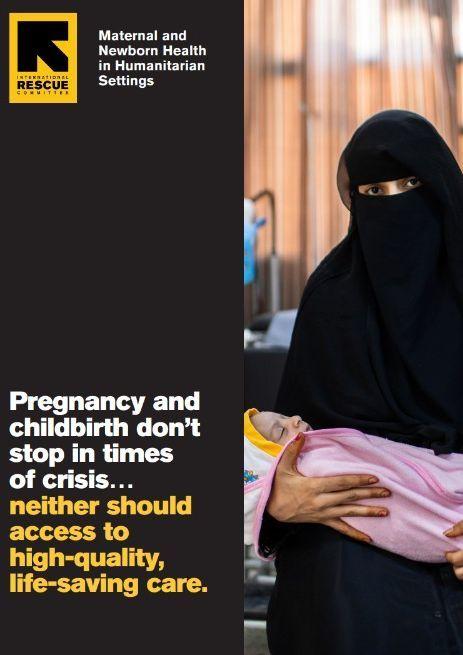

This IRC brief calls for greater investment in maternal and newborn health (MNH) in humanitarian settings, where conflict and crises weaken health systems and drive up preventable maternal and newborn deaths. The IRC delivers MNH care in 25 countries across Africa, Asia, Latin America, and the Middle East, and outlines three key strategies governments, donors, and partners should adopt to close the gap in maternal and newborn survival during crises.
Key Insights
Emergency obstetric and newborn care (EmONC) is a globally recognized essential package for reducing maternal and neonatal mortality, but it remains costly, technically demanding, and chronically underfunded in humanitarian responses.
A 2019 WHO survey found only 30% of local partners, 40% of international partners, and 50% of national partners had the capacity to deliver basic EmONC.
The 29 countries with global humanitarian response plans in 2023 accounted for 64% of global maternal deaths, 50% of newborn deaths, and 51% of stillbirths.
From 2013–2021, the IRC implemented the Minimum Initial Service Package (MISP) in 19 acute emergencies across 15 countries; in 2022 alone, about 11,000 women were treated for obstetric complications and over 215,000 deliveries were supported by skilled providers across IRC programs.
The IRC calls for rights-based, women-centered care that upholds respectful maternity care (RMC), working with its Women's Protection and Empowerment (WPE) team to expand safe spaces and women-led accountability mechanisms.
Better data systems, including maternal and perinatal death surveillance and response (MPDSR), are needed to capture the true burden of maternal and newborn mortality in crisis settings, since many countries have not conducted mortality surveys in over 5–10 years.
The IRC's EQUAL research consortium is generating evidence on facility-based and community-delivered MNH care, midwifery workforce development, and MNH financing in conflict-affected contexts, with active projects in Somalia and South Sudan.