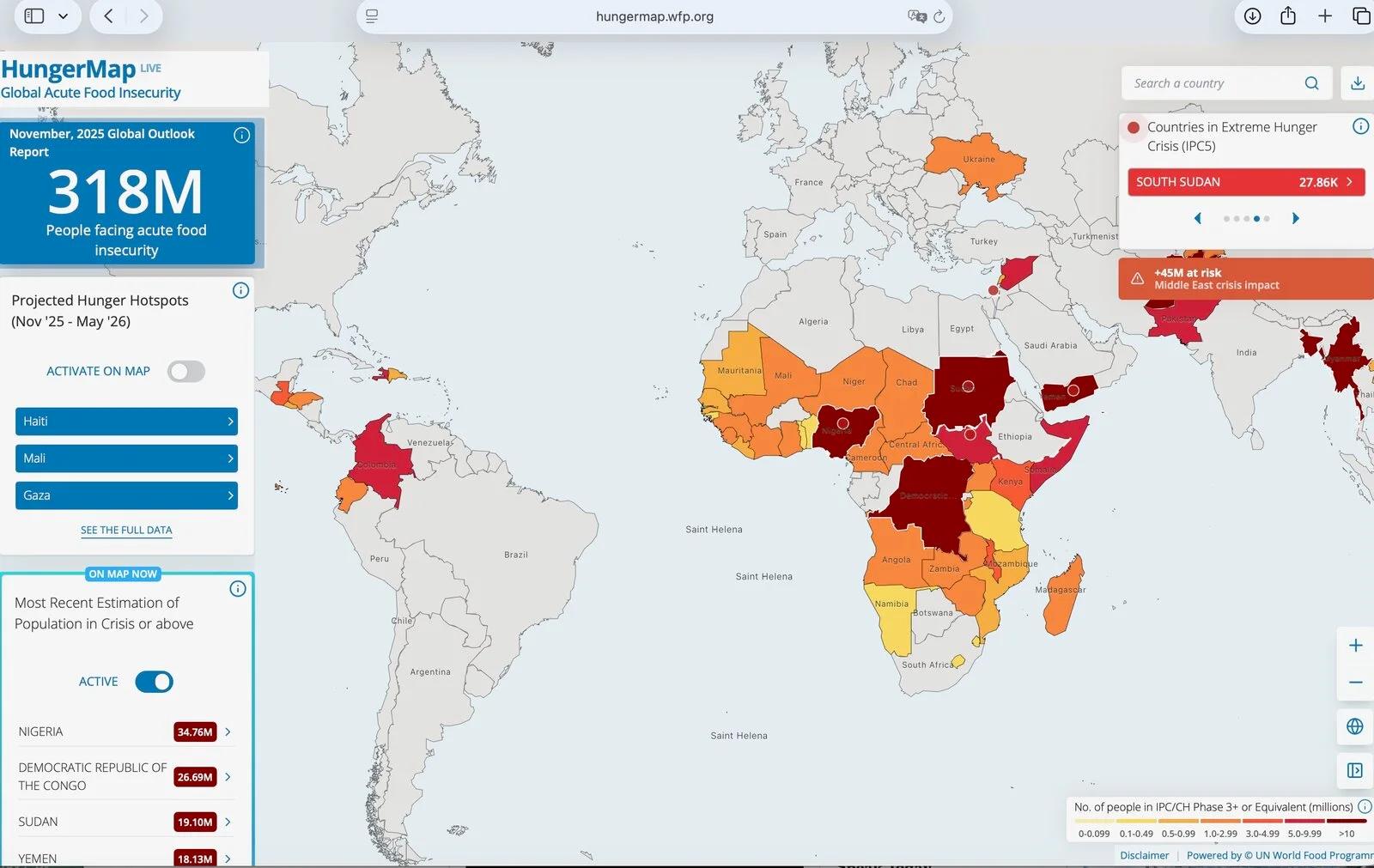
New York – The World Food Programme WFP has announced the launch of its new digital platform, HungerMap Live, an advanced interactive tool designed to enhance global food security monitoring and analysis, and support early humanitarian interventions in more than 50 countries.
The initiative comes at a time of rising global food insecurity, alongside declining funding for humanitarian action. The platform offers a comprehensive and updated picture of hunger conditions by integrating field data, advanced analytics, and AI-powered predictive models.
According to the programme, the platform enables the estimation of future food needs in 16 countries classified as severe hunger hotspots, where early forecasting tools contribute to improving response efficiency and reducing costs. Estimates suggest that every dollar invested in early interventions can generate savings of at least seven dollars.
Alarming Rise in Hunger Levels
The launch comes amid a sharp global increase in hunger levels, with the number of people facing Phase 5 of the Integrated Food Security Phase Classification (IPC5) rising from 85,000 in 2019 to around 1.4 million in 2025, reflecting a worsening food crisis in some of the world’s most fragile regions.
Comprehensive Data and Partnerships
The updated HungerMap Live platform draws on a wide network of more than 300 analysts, alongside data from international partners. This includes IPC indicators, official government statistics, and data on climate, markets, agriculture, and the economy.
With support from Google, the platform provides analytical tools to answer key questions about global food security, priority areas in need, and the main drivers of rising hunger.
Hunger in the Arab Region
In the Middle East and North Africa, around 33.2 million people continue to face food insecurity, amid growing pressures driven by conflict, economic challenges, and climate change.
The platform helps translate complex data into actionable insights, supporting early warning systems and improving humanitarian response targeting and coordination.
Funding Challenges
Despite the importance of data in crisis response, global funding for food security monitoring systems has seen a significant decline, with the World Food Programme’s data collection capacity falling by 25% over the past year, raising concerns about the effectiveness of early warning systems.
WFP officials stressed that investing in data and analysis is essential to preventing the escalation of food crises, calling for stronger support to ensure faster and more effective responses before situations turn into humanitarian disasters.
HungerMap Live is now available via the World Food Programme website.