



WORLD - A recent reel shared by Climate Clock announced that the countdown has recently dropped to less than 2 years to reach the target of maintaining global temperatures at 1.5°C by 2030.
What does this countdown represent?
Understanding the Climate Clock requires looking beyond the numbers to the science behind it, where the world currently stands, and what these developments mean for countries already experiencing the impacts of climate change, including Lebanon.

Climate Scenario Dashboard: Emissions, Temperature, and Loss and Damage
The Climate Clock
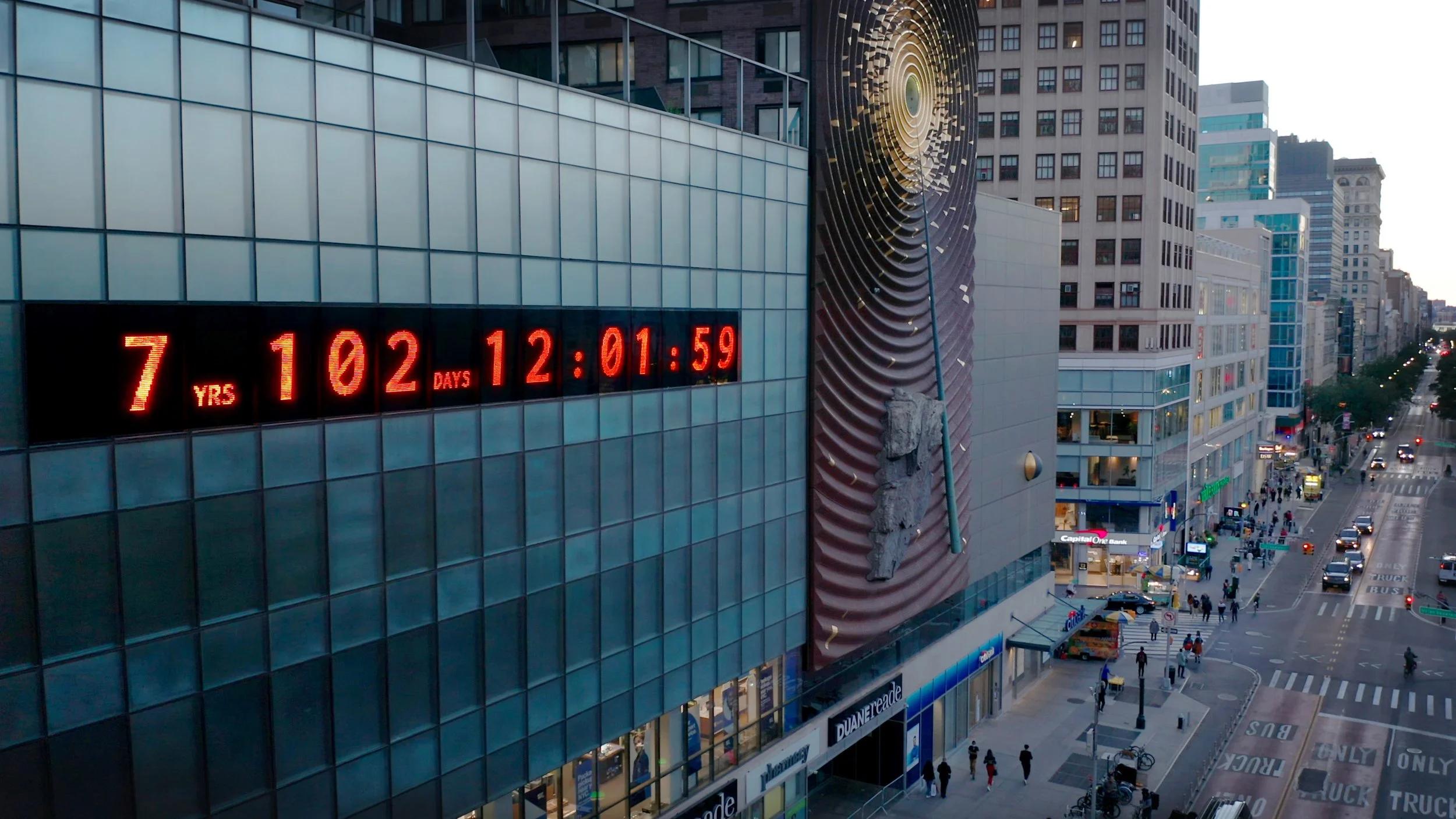
The Climate Clock is a science-based tool that calls for action on climate emergencies, with the primary purpose of communicating what should be done to address the climate crisis. The clock is on display at One Union Square South in New York City.
It is based on real-time tracking showing the remaining time before the world's carbon budget for limiting global warming to 1.5°C is exhausted if greenhouse gas emissions continue at their current rate.
Unlike a conventional timer, the clock does not measure time itself; rather, it estimates how quickly humanity is consuming the remaining carbon budget, the amount of carbon dioxide that can still be emitted while maintaining a reasonable chance of keeping global warming below the 1.5°C threshold identified in the Paris Agreement and assessed by the Intergovernmental Panel on Climate Change.

The Climate Clock in NYC’s Union Square. (Photo: Antoinette de Crombrugghe)
The Climate Clock Has Dropped Below Three Years: What Does It Really Mean?
The Climate Clock's recent drop below three years reflects the rapidly shrinking carbon budget available to limit global warming to 1.5°C.
Having less than 3 years to meet our target, the message shared in the recent reel should therefore not be interpreted as a prediction that the world has only three years left before climate catastrophe unfolds.
Rather, it is a reflection of the pace at which humanity is consuming the remaining carbon budget under current greenhouse gas emission levels. In other words, if emissions continue at today's rate, the remaining carbon budget associated with the 1.5°C target could be exhausted within the next three years.
The scientific evidence supporting this warning is increasingly compelling. According to the World Meteorological Organization (WMO), the Earth's average temperature has already risen by approximately 1.3°C above pre-industrial levels, bringing the world dangerously close to the 1.5°C threshold established under the Paris Agreement (WMO, 2025).
Meanwhile, atmospheric carbon dioxide concentrations continue to reach record highs, driven primarily by fossil fuel combustion, deforestation, and unsustainable land-use practices.
Although nearly every country has adopted climate commitments under the Paris Agreement, progress has not kept pace with the ambition required. The United Nations Environment Programme (UNEP) concludes that current national policies and nationally determined contributions (NDCs) remain insufficient to achieve the 1.5°C target.
Without significantly stronger emissions reductions this decade, the world is projected to exceed this threshold and face increasingly severe climate risks.
Nevertheless, scientists emphasize that surpassing 1.5°C does not represent an abrupt point of no return, nor does it render climate action ineffective. Instead, every fraction of a degree of warming avoided can substantially reduce the frequency and intensity of extreme weather events, biodiversity loss, food insecurity, and public health impacts.
The Climate Clock therefore serves not as a countdown to failure, but as a reminder that the choices made over the next few years will determine the magnitude of climate impacts experienced for decades to come.
What the Climate Countdown Means for Lebanon
While the Climate Clock reflects a global challenge, its implications are already being felt in Lebanon. The country has experienced increasingly frequent and intense heatwaves in recent years, with temperatures repeatedly exceeding seasonal averages and prolonged periods of extreme heat becoming more common.
This summer has been no exception, as several heatwaves brought exceptionally high temperatures and humidity, increasing the risk of heat stress, straining electricity demand, and elevating wildfire risk across many regions.
These events are not isolated weather anomalies but are consistent with broader climate trends observed across the Eastern Mediterranean, a region identified by the IPCC as particularly vulnerable to climate change.
Rising temperatures, declining water availability, prolonged droughts, and more frequent extreme weather events are expected to become increasingly common as global warming intensifies.
For Lebanon, these changes extend beyond uncomfortable summer days. Higher temperatures place additional pressure on already limited water resources, reduce agricultural productivity, increase the likelihood of forest fires, and pose growing risks to public health, particularly for older adults, outdoor workers, and vulnerable communities.
They also exacerbate existing challenges related to energy security, as greater demand for cooling places further strain on an already fragile electricity sector.
Turning Warning into Action
The Climate Clock may represent a global countdown, but its consequences are becoming increasingly local. For Lebanon, the question is no longer whether climate change will affect the country; it is how prepared it is to adapt to a warmer and more climate-vulnerable future.
The Climate Clock is not simply a countdown; it is a reflection of the choices humanity continues to make. Its recent drop below three years should not be interpreted as a prediction of inevitable failure, but as a stark reminder that the window for limiting the most severe impacts of climate change is rapidly narrowing.
While the challenge is global, its consequences are increasingly local, as demonstrated by the rising temperatures, recurring heatwaves, and growing climate-related risks already affecting Lebanon. Science is clear, and the solutions are well known. The challenge now lies not in understanding the problem, but in accelerating the pace of implementation.
Governments must strengthen climate policies and invest in mitigation and adaptation, businesses must embrace more sustainable practices, and communities must build greater resilience to a changing climate. The Climate Clock is not counting down to the end of the world; it is counting down the time available to avoid its worst outcomes.
Whether future generations remember it as a warning that inspired decisive action or as a reminder of missed opportunities will depend not on the clock itself, but on the decisions we make today.