



WORLD - World Mental Health Day on 10 October carries a theme that sounds like an answer: "Lived experiences heard: real voices, real change". WHO's numbers show the gap. Eighty percent of countries with a mental health policy consulted people with lived experience while writing it; only 37% involved them in training the workers who deliver care. Lebanon is in the right direction, the National Mental Health Strategy calls for the effective participation of people with lived experience in the decision-making process.
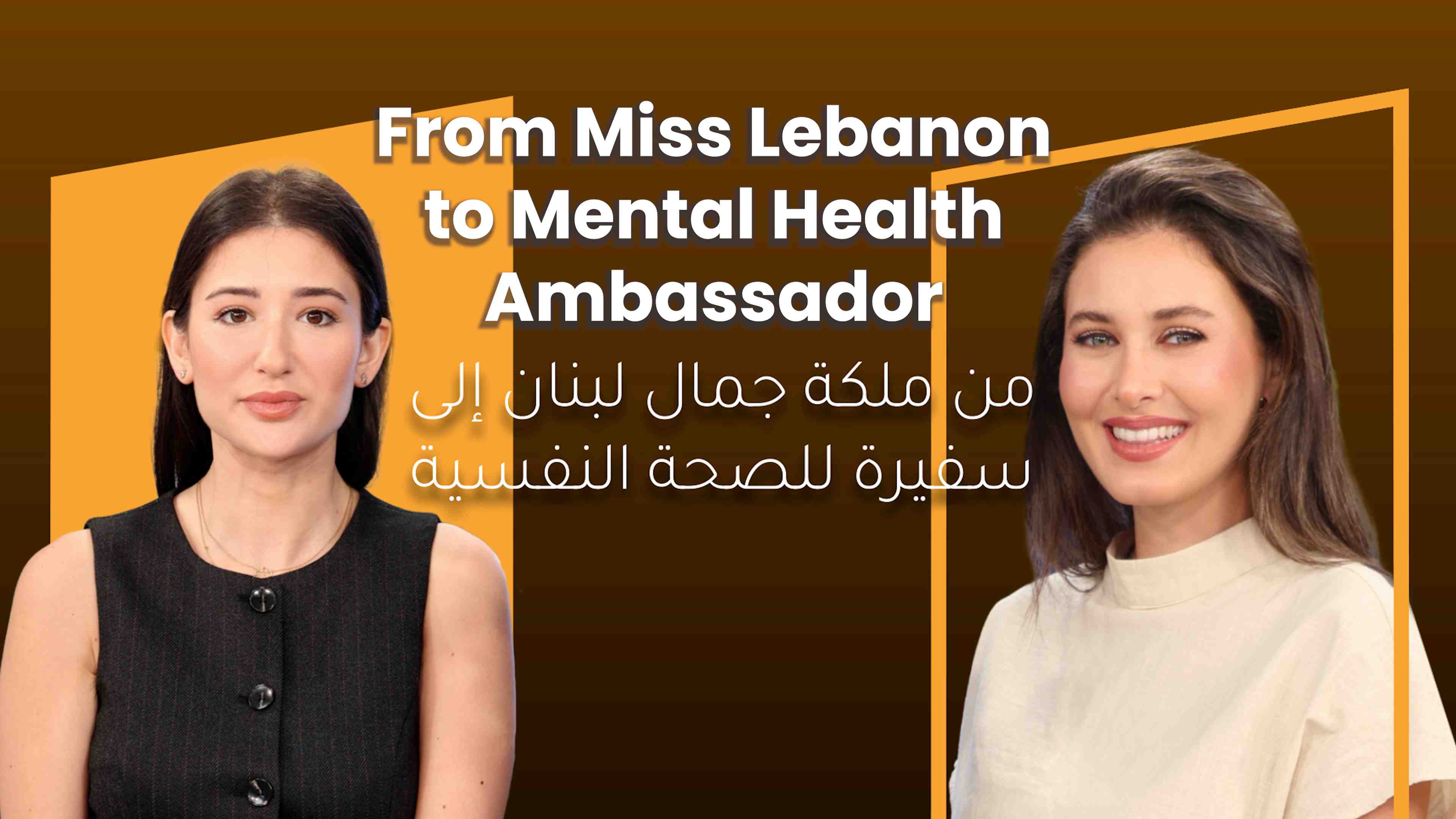
That distance, between being consulted and being involved, is where Ms. Sasha Hajj Assaf works. She is the president of Justice For Mental Health, the first association in Lebanon founded and led by people with mental health lived experience.
"The issue isn't me, it's the system"
The association was built out of its founders' own experience with mental healthcare. "There's something very essential that comes when you go through the tunnels of the mental health system," Hajj Assaf says. What it produced was a conclusion: "As I was going through the system, I was noticing that the issue isn't me. The issue is in the system that doesn't know how to cater for me and for people like me."
The idea comes from disability rights. "You become disabled when you are faced by barriers," she says. "This disability is not really within. It's really when you're trying to encounter the system that's around you." In other words, the condition is not what disables a person; workplaces, educational institutes and the overall society that cannot accommodate them are. Lebanon signed the UN Convention on the Rights of Persons with Disabilities in 2007 and ratified it only in June 2023.
"Dignity is looking at the person"
At the national strategy's launch, Ms. Hajj Assaf called on the government and other partners to ensure that every service user in Lebanon "enjoys their dignity and human rights." Asked what that means in practice, her answer is short. "Simply put, dignity is looking at the person". Centering the person instead of centering targets, indicators, and numbers.
It starts with language. "We prefer not to use this term patient," she says. "We'd rather use service user, or persons with lived experience." In practice she gives three examples: no violence in treatment, even when a service user is resistant. A psychiatrist explains the method being proposed and every side effect to expect from it. Nothing forced and options offered, the person is treated as someone who knows their own needs. Each cuts at the same target. "There's this hierarchy within the mental health system, and generally the health system," she says.
Rights are the starting point
A change of lens is needed. Mental health gets handled as a service to deliver: more beds, more clinicians, shorter waits. When at its base it is a matter of rights. WHO made the same turn in March 2025: its guidance on national mental health policy tells governments to replace "outdated institutional models that fail to meet international human rights standards" with care built on a "person-centered, recovery-oriented and rights-based approach."
Lebanon has committed on paper. The National Mental Health Strategy 2024–2030 calls expanding community services "one of the critical strategies to achieve the deinstitutionalization of mental health care," and records two residential psychiatric facilities closed after human rights violations.
Human rights are not common practice. Part of what is missing is literacy: rights are not well understood across the system, not by the public and not always by those working inside it, so a right written into a strategy does not reach the ward on its own. The other obstacle is the explanation always offered scarcity of resources. Ms. Hajj Assaf argues that this is not acceptable. "Being short on resources, capacities and so on should never stand in the way of people accessing their rights, their basic human rights."
Which conditions get taken seriously
The public conversation, Ms. Hajj Assaf argues, tilts toward the conditions easiest to accept. "We look at mental health in a shallow manner," she says. "Lighter things that people would accept more like anxiety, depression, because it's cuter, it's softer, people accept it more." Everything after that is more severe and that is where the institutions are. Worldwide, WHO counts 49% of psychiatric hospital admissions as involuntary. "We have to put words on these things," she says.
Still finding its footing
Recognition as colleagues takes longer. Justice For Mental Health is the first association of its kind in Lebanon and in the region, so there is no settled place for it yet in the rooms where mental health policy is made. In the meantime, Justice for Mental Health works on mechanisms that exist, working directly with the National Mental Health Programme and creating a sense of community through activities it runs for other people with lived experience. That work is where much of its standing comes from: when it speaks in a policy room, it speaks for a community it is in regular contact with.
What encourages her is elsewhere: low- and middle-income countries where peer-led participation is already established, and colleagues across Africa, Latin America and India doing the same work. Being first in Lebanon and the region means there is no template to follow, so the association is writing one as it goes. This year's theme asks that lived experience be heard. Lebanon now has an organization built for exactly that, and its instruction to the system is the simplest one there is: look at the person.