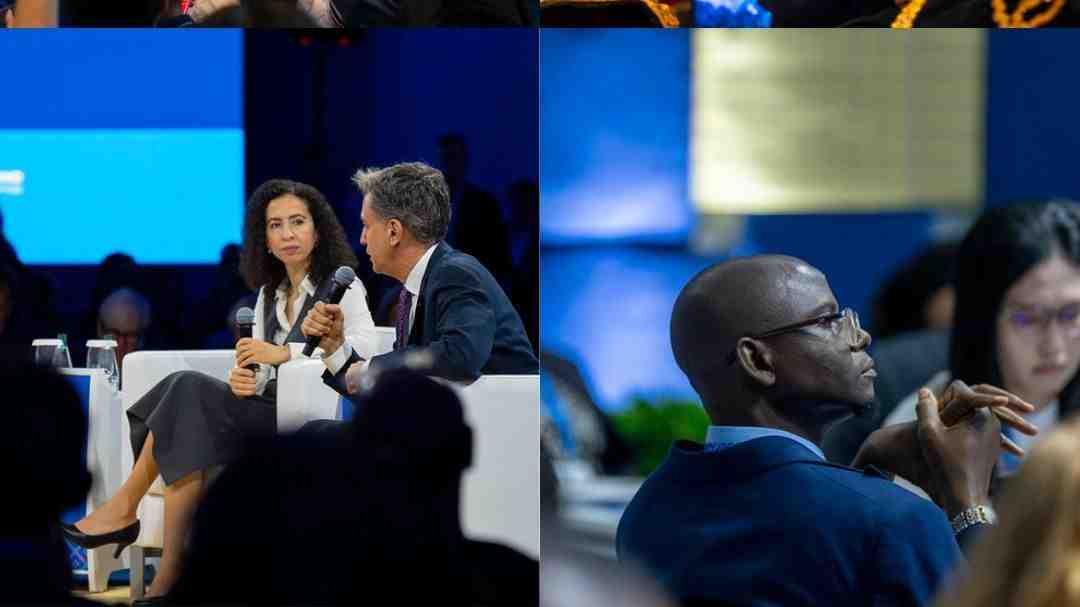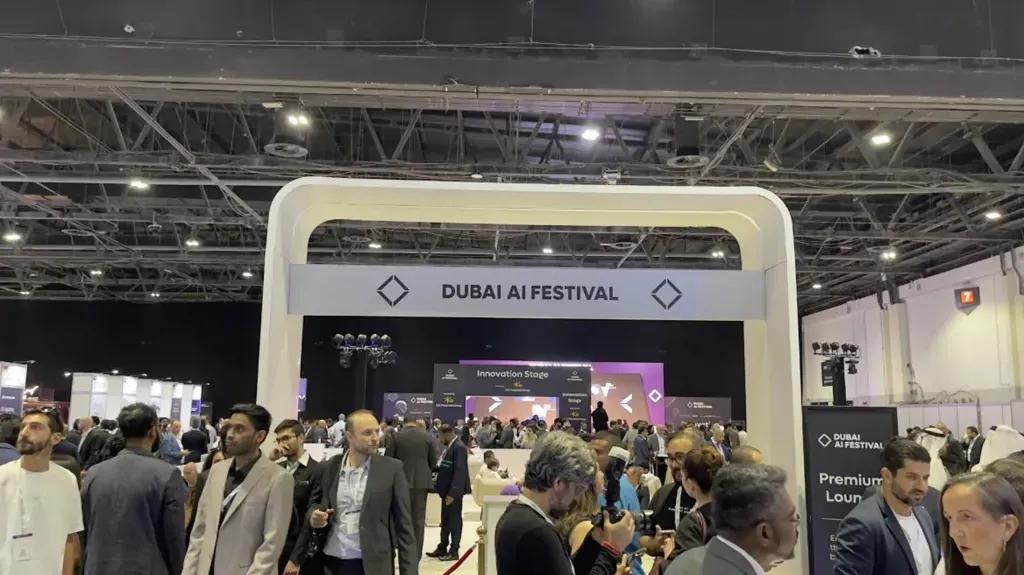
DUBAI — The third edition of the Dubai AI Festival 2026 took place at the Dubai World Trade Centre on October 26–27, bringing together government officials, technology industry leaders, investors, and experts from around the world to discuss the future of artificial intelligence and its practical and economic applications.
The festival is organized by the Dubai AI Campus, part of the Dubai International Financial Centre (DIFC), in partnership with the Office of the Minister of State for Artificial Intelligence, Digital Economy and Remote Work Applications, under the theme “Where AI Meets Opportunity.”
From Experimentation to Real-World Applications
The festival focuses on moving artificial intelligence beyond the experimental stage toward practical implementation within companies and government institutions. Discussions explore how the technology can enhance productivity, drive innovation, and improve institutional performance, alongside the challenges of expanding its adoption across different economic sectors.
The program covers several key areas, including AI agents, digital infrastructure, governance and ethics, technology investments, and the future of work. It also examines AI applications in financial services, government, industry, and healthcare.
Artificial Intelligence in Medical Education
In the healthcare education sector, Dubai Medical University presented initiatives aimed at integrating artificial intelligence into student training and preparing future professionals to use emerging technologies in medicine, pharmacy, nursing, and health sciences.
Professor Sharif Khalifa, Vice President for Academic Affairs at the university and Dean of the College of Pharmacy, explained that the university had launched an initiative to simplify AI concepts in medical education, helping students and faculty members understand and benefit from its applications.
The initiative featured 26 speakers from different countries, including experts specializing in the use of artificial intelligence in medical and health education and practice. Discussions addressed the future of healthcare and education professions, as well as concerns about the technology's potential impact on employment opportunities.
AI-Powered Virtual Trials
In the legal sector, the festival witnessed the launch of Meta Legal Space, a platform developed by UAE-based Legaline to provide a virtual training environment for law students and trainee lawyers through AI-powered mock trials.
The platform allows trainees to take on the role of counsel for either the plaintiff or the defendant and interact with virtual judges, witnesses, experts, and opposing lawyers whose responses change according to the questions, arguments, and objections presented.
Unlike traditional mock trials, which often rely on predetermined scenarios and scripted answers, the platform enables trainees to encounter unexpected situations and practice cross-examination, witness credibility assessment, and decision-making under pressure.
The simulations can be conducted directly through a web browser at different times. Each virtual witness has a distinct professional background and personality, as well as varying levels of credibility, allowing trainees to develop their legal skills before participating in actual court proceedings.
Healthcare Initiatives and Technology for Preserving Heritage
In healthcare, Hessa Lootah, Head of Artificial Intelligence and Innovation at Dubai Medical University Hospital, presented initiatives that use technology to serve the community.
One initiative focuses on documenting traditional Emirati medicine and preserving related knowledge for future generations. The project team conducted 16 interviews with doctors and experts from different parts of the UAE, from Ras Al Khaimah to Abu Dhabi, to collect information and make it accessible to students through a system that allows them to ask questions and receive educational answers.
Another innovation presented was a smart chair capable of measuring body temperature and respiratory rate in approximately 45 seconds, compared with four minutes using the conventional process, according to the initiative's representatives.
These projects demonstrate the growing range of AI applications, extending from education and legal training to healthcare and the preservation of local heritage. They also reflect a broader shift toward developing practical solutions that address the needs of institutions and communities.
Governance and the Future of Work at the Center of Discussions
Beyond practical applications, the festival addresses global AI governance, the ethics of AI use, the skills needed to work with emerging technologies, and the challenges of integrating AI into institutions and developing the infrastructure required to support it.
The event highlights the rapid transformation in AI adoption, emphasizing the shift from technology development to implementation across multiple sectors. It also explores the economic and social opportunities these applications may create, alongside the regulatory and professional challenges accompanying this transition.