
Lebanon’s solid waste crisis is no longer only a municipal service challenge. Years of economic collapse, weak enforcement, repeated shocks, displacement pressures, and limited infrastructure have turned solid waste management into a cross-cutting issue affecting public health, the environment, local economies, urban resilience, and social equity.
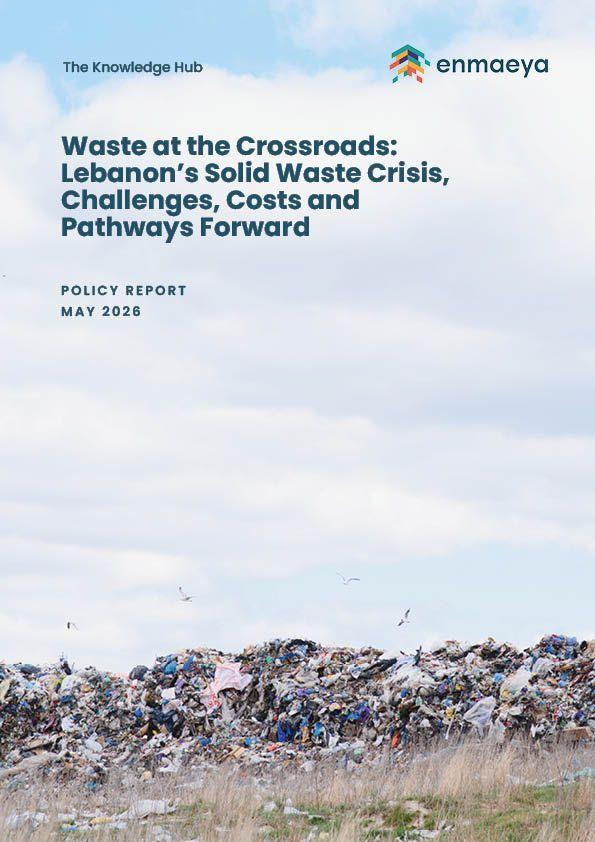
Waste at the Crossroads: Lebanon’s Solid Waste Crisis, Challenges, Costs and Pathways Forward (2026) provides a synthesis of available data, reports, and policy frameworks to examine the state of solid waste management in Lebanon, its structural barriers, and its wider multisectoral impacts. The report links waste mismanagement to environmental degradation, water and soil contamination, health risks, municipal financial strain, and losses in key sectors such as tourism, agriculture, real estate, and fisheries.
Prepared by Enmaeya’s Knowledge Hub, the report offers an accessible and policy-oriented overview intended to inform policymakers, stakeholders, practitioners, and the concerned public. It also proposes inclusive and context-sensitive recommendations for Lebanon, including integrating informal waste workers, involving displaced communities in local waste planning, adopting results-based financing, and gradually introducing fair cost-recovery mechanisms.