



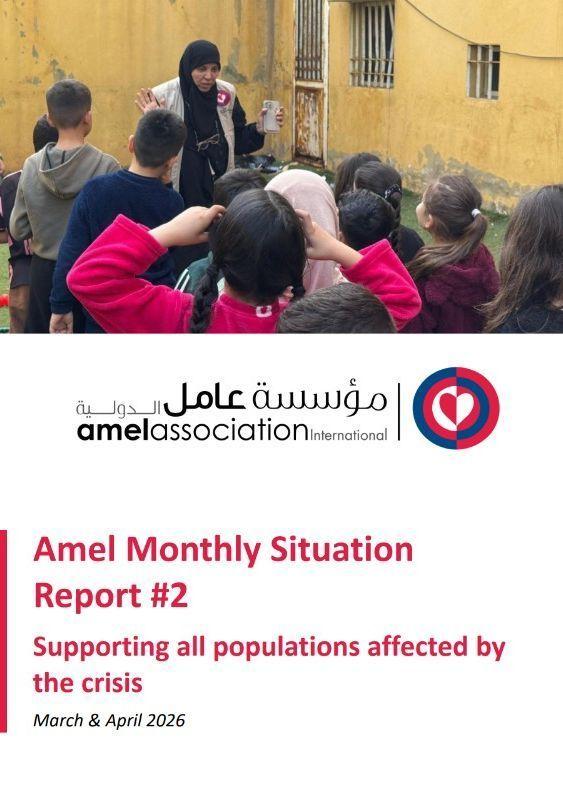

Amel Monthly Situation Report #2: Supporting All Populations Affected by the Crisis is a humanitarian situation report by Amel Association International, covering March and April 2026. It presents Amel’s emergency response across Lebanon amid renewed conflict, displacement, infrastructure damage, and rising humanitarian needs. The report focuses on health, protection, education, distributions, older people, persons with disabilities, migrants, and displaced families.
Key insights:
Lebanon’s humanitarian crisis remains severe despite the fragile ceasefire. The report notes that more than 1.2 million people were displaced, with many families living in overcrowded shelters, cars, or temporary arrangements. Damage to roads, bridges, and health infrastructure continues to restrict access to food, healthcare, and humanitarian assistance.
Amel reached a large number of affected people across the country. Amel reported reaching 101,581 people across 187 sites, including collective shelters, households, municipalities, camps, schools, and health centers. The response covered 110 collective shelters and relied on 24 mobile units to reach vulnerable and underserved areas.
Health services were the largest part of the response. Amel provided 51,399 health services, including 30,982 primary healthcare consultations, medication dispensing, referrals, mental health support, reproductive health services, and awareness sessions. The response relied on 19 active primary healthcare centers and 14 mobile medical units.
Protection needs are growing, especially for women, children, and displaced families. The protection response reached 20,329 people, with activities covering psychosocial support, GBV prevention and response, child protection, case management, awareness sessions, and emergency cash assistance. The report highlights that overcrowding, loss of support networks, trauma, and disrupted services are increasing protection risks.
Children’s education and psychosocial needs are urgent. Amel reached 19,780 children through education-related activities, recreational sessions, social-emotional learning, and retention support. The report also identifies major gaps, including shortages of stationery, education materials, psychosocial support kits, and internet access for online learning.
The response prioritizes people with specific needs, but gaps remain. Amel reached 1,748 people with specific needs and distributed 323 assistive devices. Older persons, persons with disabilities, pregnant and lactating women, migrants, and isolated households were highlighted as groups needing targeted support. The report stresses that sustained funding, stock replenishment, safer access, and stronger coordination are needed to continue and scale up the response.