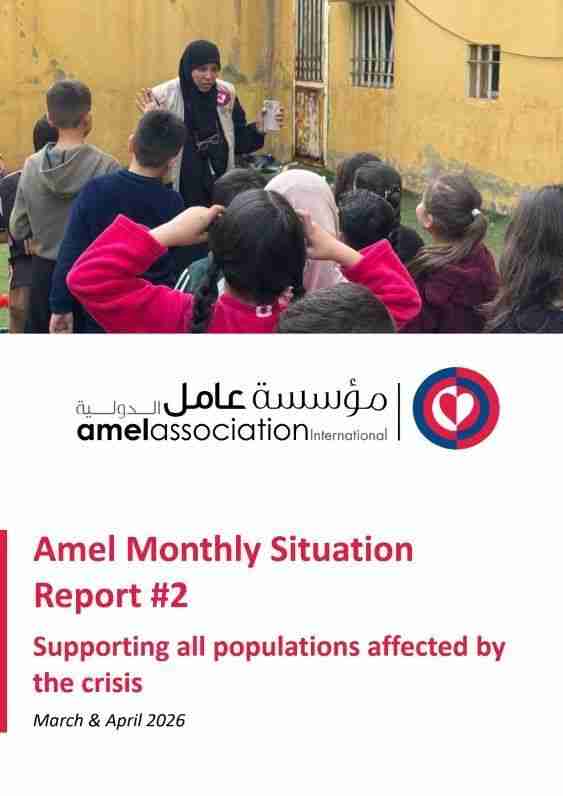



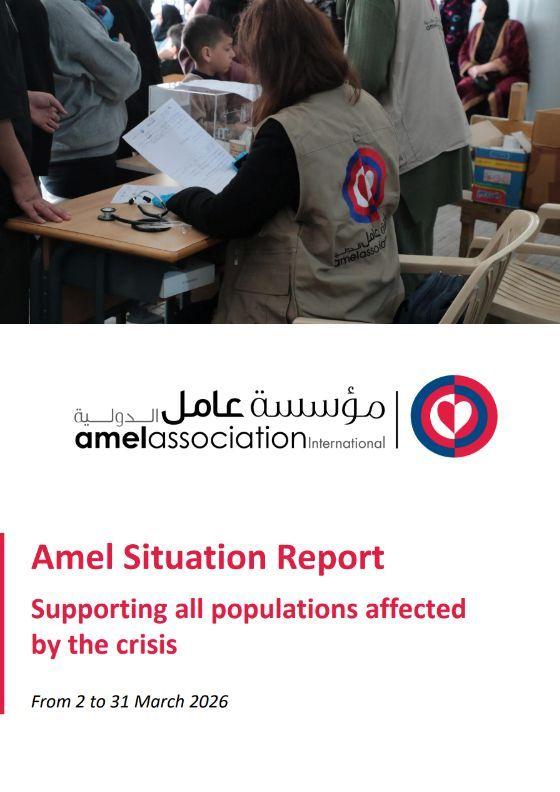

Amel Situation Report: Supporting All Populations Affected by the Crisis is a humanitarian situation report issued by Amel Association International, covering the period from 2 to 31 March 2026. It presents Amel’s emergency response during the first month of the renewed crisis in Lebanon, focusing on displaced populations, health services, protection, education, distributions, older people, persons with disabilities, pregnant and lactating women, and migrants.
Key insights:
Lebanon faced a rapidly deteriorating humanitarian situation.
The report states that more than 1.2 million people were displaced, with many families living in unsafe and unstable conditions. It also notes that 15% of Lebanese territory was under evacuation orders, while damaged roads and bridges in South Lebanon limited access to food, medical care, and humanitarian aid.
Amel reached tens of thousands of affected people in the first month.
Amel reported reaching 54,937 people across 170 sites, including shelters, households, municipalities, camps, health centers, and informal settings. The response covered 104 collective shelters, while 90% of internally displaced people were outside collective shelters.
Health services were a major part of the response.
Amel provided 21,354 health services, including 13,868 medical consultations, medication dispensing, referrals, mental health services, and reproductive health support. The response relied on 11 active primary healthcare centers and mobile medical units reaching vulnerable areas.
Protection needs were significant, especially for children, women, and displaced families.
Protection interventions reached more than 17,600 people, with activities including psychosocial support, child protection, GBV prevention and response, case management, emergency cash assistance, and recreational activities for children.
The report highlights urgent needs and operational challenges.
The main challenges include reaching displaced people outside shelters, shortages of medicines and relief items, limited access to high-risk areas, and the need for stronger coordination between ministries and humanitarian actors. Amel’s next priority is to scale up its response to reach up to 100,000 people per month.