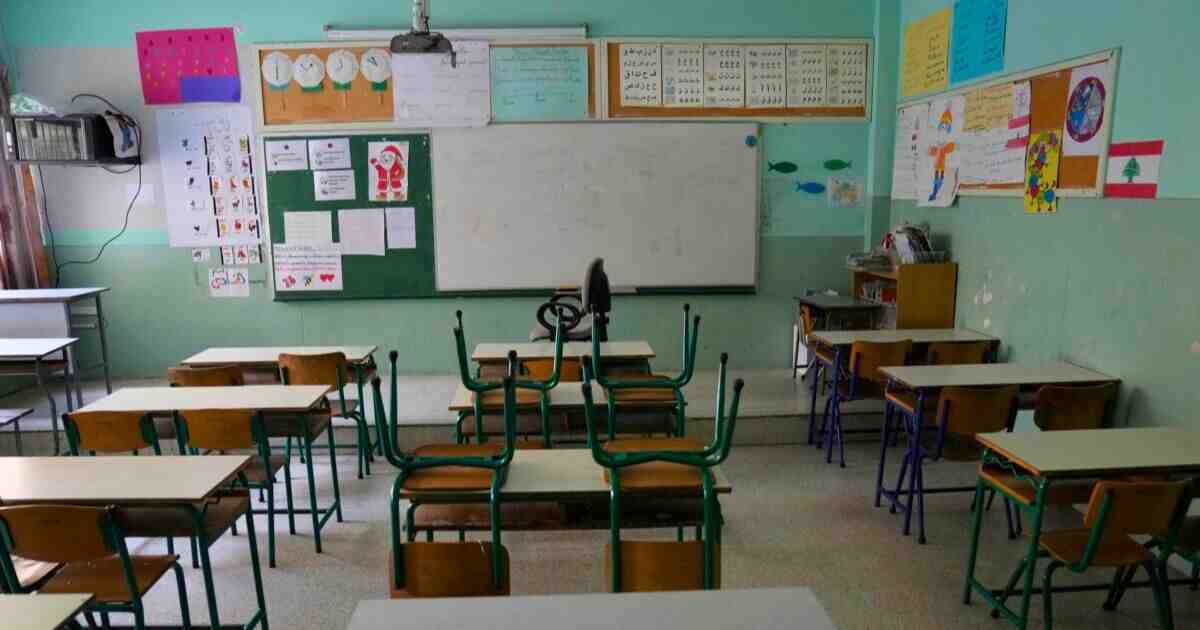
LEBANON - In Lebanon, where young people encounter news through increasingly diverse media channels, connecting journalism with education offers one way to encourage curiosity and critical thinking.
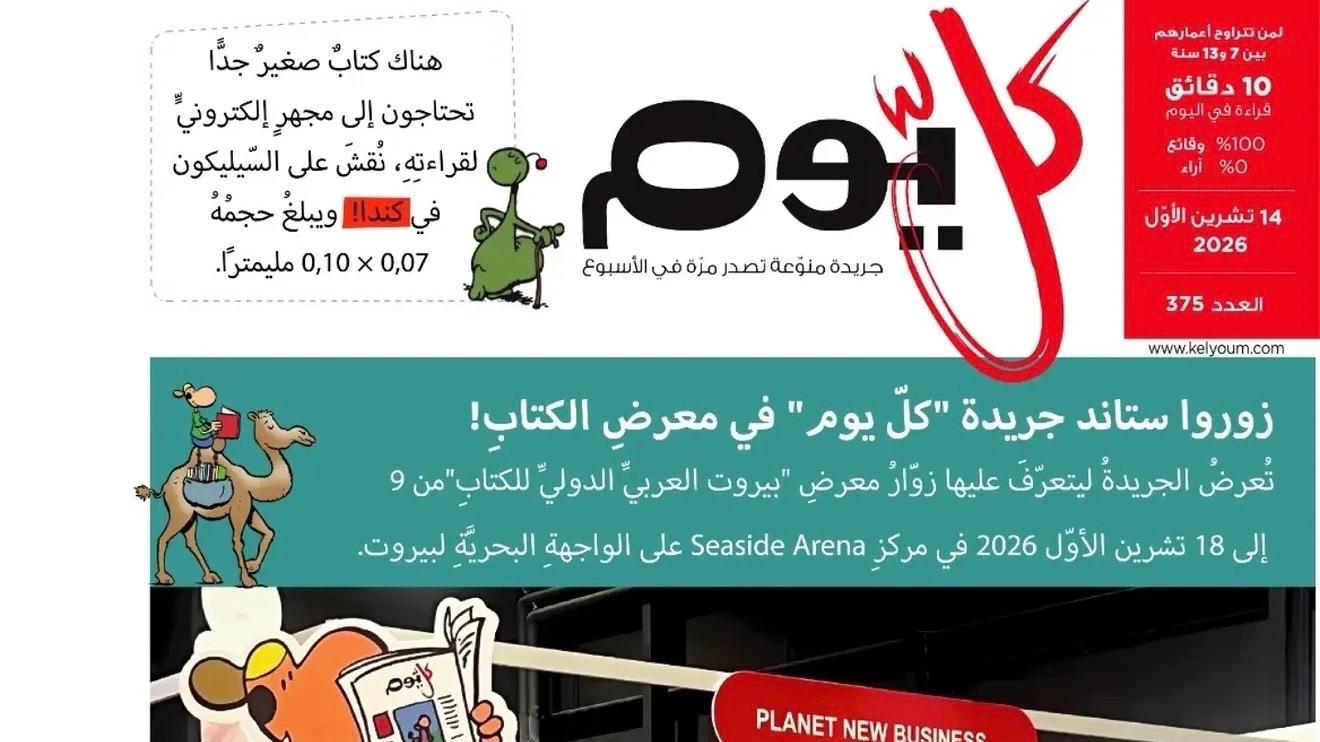
Kel Yom Kids, a weekly Arabic-language newspaper for children aged 6 to 13, addresses this challenge by linking news coverage to the school curriculum and placing academic subjects in the context of real-world events.
Launched in Qatar in 2011 and introduced in Lebanon in 2013, the publication covers developments in Lebanon, the Arab world and internationally, linking them to topics children study at school.
The approach is intended to demonstrate the practical relevance of subjects such as history, geography and science while encouraging young readers to engage with current affairs beyond the classroom.
The concept emerged from the intersection of education and journalism. Founder Lamia Rassi spent 13 years as a school principal in Akkar, where she identified a need to connect classroom learning with children's awareness of the wider world. Her partner's experience as one of the founders of a Lebanese newspaper provided the journalistic perspective that helped shape the publication.
Connecting Education with Everyday Life
For Rassi, the newspaper's central purpose is to help children understand why they learn what they do at school.
“We wanted to connect their daily lives to what they learn in school,” Rassi told enmaeya. The idea, she tells enmaeya, also responds to a question that generations of students have asked: why do they need to study subjects such as history and geography?
Beyond making education more engaging, the approach aims to stimulate children's minds and encourage curiosity without making them feel that they are being taught another lesson.
Building Media Literacy From an Early Age
The newspaper's educational mission also extends to helping children navigate an increasingly complex information environment. As misinformation circulates online and artificial intelligence makes it easier to generate convincing but misleading images, the ability to assess information has become increasingly important.
Rassi emphasizes the role of reliable reporting and scientific explanations in helping children distinguish facts from misinformation. She pointed to media literacy initiatives in France, where schools have introduced dedicated sessions, as well as efforts to integrate the subject into Lebanon's education system.
Rassi says that 30% of children who receive such education do not share information before fact-checking. These habits contribute to helping young readers become more discerning consumers of information.
Keeping Children's Journalism Accessible
While the publication is no longer operational in Qatar, Kel Yom Kids has approximately 2,000 subscriptions in Lebanon. An annual subscription costs $20, a price Rassi explained was intended to make the newspaper accessible to individuals and schools while helping cover production and distribution costs.
The publication is available in print and digital formats, although print remains the preferred option because of reader demand.
In 2026, Kel Yom Kids took part in the Beirut Book Fair, bringing its children's publication to a wider audience and positioning its work within Lebanon's broader literary and publishing landscape.
Looking ahead, Rassi hopes to expand into additional countries, adapting the newspaper to local events and school curricula while retaining its underlying educational approach.
Sustaining that growth remains a challenge. Rassi emphasized the importance of institutional support, including from the ministries of Culture and Information, to promote the newspaper and help reduce distribution and logistical costs.
The idea behind Kel Yom Kids is that learning should extend beyond textbooks and classroom walls. By introducing children to the events, people and ideas shaping the world around them, the newspaper hopes to help young readers understand not only what is happening, but also how it connects to what they learn and experience in their everyday lives.