LEBANON– The United Nations Children's Fund (UNICEF), in cooperation with Lebanon's Ministry of Information and the United Nations Information Centre in Beirut, has launched guidelines aimed at strengthening the protection of children's rights in media coverage and safeguarding their dignity and privacy, particularly during crises and emergencies.
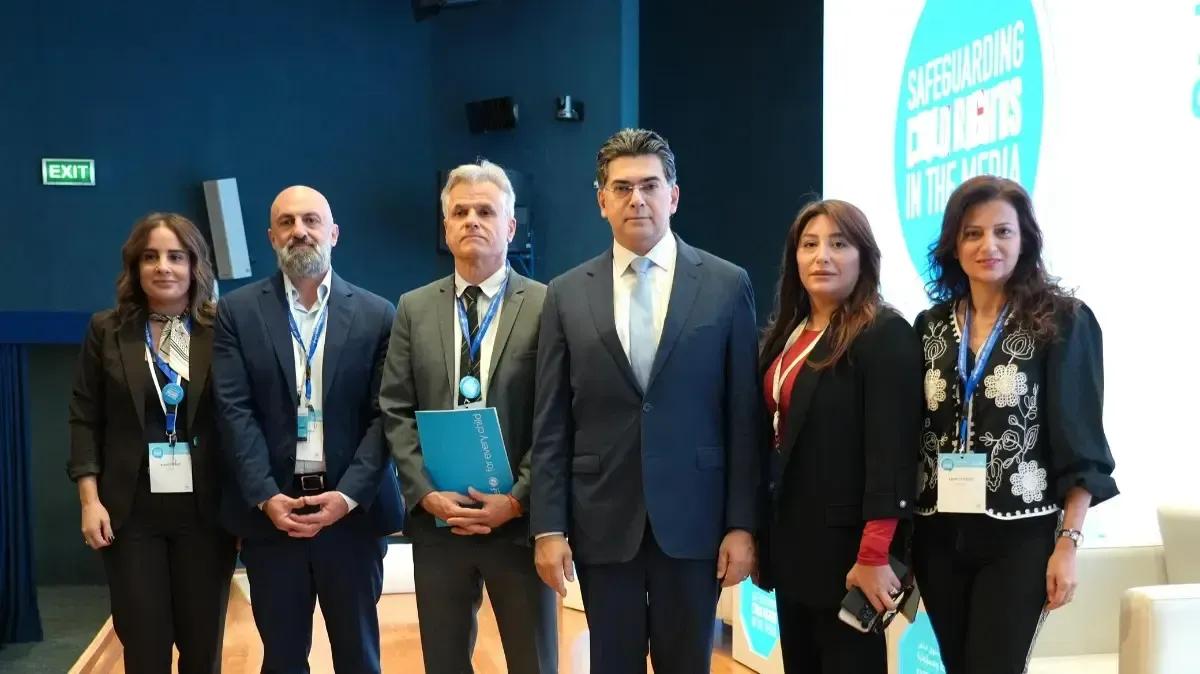
The announcement was made during a national conference titled "Media and Children's Rights: Partnership and Responsibility," held in Beirut ahead of World Children's Day on November 20. The event was attended by Information Minister Paul Morcos, UNICEF Acting Representative and Chief of Advocacy and Communications Christophe Boulierac, as well as journalists, media professionals, university students, and content creators.
Boulierac stressed that protecting children in the media is a shared responsibility, highlighting the need to balance reporting on issues of public interest with protecting children from harm. This includes safeguarding their identities and privacy while ensuring their voices are heard without putting their safety at risk.
He noted that decisions concerning how children are portrayed in media coverage, the images published of them, and the information disclosed about them can have long-term consequences, particularly during conflicts and emergencies. He added that protecting children's rights does not mean restricting journalism, but rather strengthening its professionalism and responsibility.
Programme to Promote Responsible Internet Use
For his part, Morcos announced that the Ministry of Information will launch a preventive media programme in the coming days, in cooperation with UNICEF and public and private media outlets, to promote responsible internet use among children.
He explained that the programme follows a Cabinet decision issued on February 26, which established a national committee comprising ministries, public administrations, and entities concerned with children's rights. The committee is tasked with preparing a plan consisting of legislation, a programme, and measures to promote the safe and responsible use of the internet.
Morcos stressed that the plan does not seek to prevent children from using the internet, but rather to guide their online activities and reduce its potential negative effects, with prevention and awareness-raising as key priorities.
He also highlighted Lebanon's new Media Law, enacted approximately two months ago, noting that it includes provisions on media ethics and the protection of vulnerable groups, including children. Article 96 specifically addresses this issue.
Media Pioneers for Children's Rights Initiative
The conference featured two panel discussions addressing media coverage of children's issues during emergencies and the promotion of children's rights and participation in the media. Discussions focused on professional and ethical standards that ensure respect for children's dignity and privacy.
As part of the ongoing partnership between UNICEF and the Ministry of Information, the two entities also announced the launch of the Media Pioneers for Children's Rights Initiative 2027, aimed at expanding cooperation with journalists and media institutions and encouraging responsible, ethical journalism grounded in children's rights.
Participants were also provided with practical resources and tools on interviewing children, ensuring their safe participation, protecting their identities and privacy, and using images and media materials in ways that preserve their dignity.
These efforts build on the cooperation between UNICEF and the Ministry of Information, which began with a national dialogue in 2023 to strengthen the media sector's commitment to children's rights and ensure that their best interests are respected in media coverage.